
• Link to LinkedIn
  • Link to Facebook
  • Call Us
NutriFusion
  • Applications
    • All Blends
    • Food
    • Beverages & Drinks
    • Nutraceuticals
    • Pet Nutrition
    • Custom Superfood
  • R&D
    • Research & Development
    • Vitamin Deficiency
  • Active Research
  • About
    • About NutriFusion®
    • Certifications
  • Contact
  • News
    • Press Center
  • Podcasts
  • Blog
  • Store
  • Click to open the search input field Click to open the search input field Search
  • Menu Menu

Archive for category: Health & Nutrition

Imposing Soda Tax: A Solution for The Ballooning Diabetes and Heart Disease Problems

in Beverages & Drinks, Food Business, Health & Nutrition, Kid's Health

Global diabetes and heart disease rates have ballooned over the last 25 years. Among the countries that have the highest rate of diabetes and heart diseases, Mexico tops the list according to Dr. Kirsten Bibbins-Domingo. She is a UCSF professor medicine and director of UCSF Center for Vulnerable Populations. Another problem in the country is obesity. With the global obesity rate growing at 11% and 15%, respectively, for both men and women, Mexico harbors a lot of obese individuals in the world. It is strikingly alarming to take note that around 75% of adults in Mexico are obese.

To solve the problem, the Mexican government proposed a solution to address this chronic health issue by imposing a 10% excise tax on sugary drinks in 2014. This tax rate is designed to curb the consumption of sugary beverages. Thus, decreasing the number of people who have diabetes and cardiovascular diseases. Moreover, this strategy allows the government to save about $1 billion in direct health care cost due to these conditions.

Is the Sugary Drink Tax Effective?

In a study published in PLOS Medicine, simulation models of cardiovascular diseases and diabetes in Mexico was done. The simulation model was developed on the well-established model used in the United States in 1980.

Researchers from the Instituto Nacional Salud de Publica (INSP) in Cuernavaca in Mexico and from the UC San Francisco estimated that the sugary drink tax in the country will likely prevent 20,000 cases of heart attack, 190,000 cases of diabetes, and 19,000 deaths among adults from the age of 35 to 90 within the next ten years.

The sugary drink tax is not the only tool to turn around this health epidemic in Mexico, but it will also mean a lot of savings for the people and the government according to senior researcher, Simon Barquera. For instance, it will reduce healthcare spending such as clinic visits and hospitalization by as much as $983 billion. The health benefits will strongly be felt among young adults who are avid consumers of sugary drinks.

Backed by The World Health Organization

The World Health Organization (WHO) issued a report that indicated that imposing sugary drinks could decrease Type 2 diabetes, tooth decay, and obesity. Increasing the retail price to 20% can trigger a reduction in consumption because people will have second thoughts about buying expensive drinks.

Obesity is a rising problem in many rich and developing countries. The problem started more than a decade ago, and it has affected mostly people from the middle-income and lower-income bracket.

The sugary drink tax imposed in Mexico in 2014, according to WHO spokesman Paul Garwood, was favorable wherein the agency observed a substantial drop in the consumption of not only sugar but also caffeine.

Inspired by www.ucsf.edu/
https://nutrifusion.com/wp-content/uploads/2022/05/NutriFusion-Logo-New-1030x251.png 0 0 NF Admin https://nutrifusion.com/wp-content/uploads/2022/05/NutriFusion-Logo-New-1030x251.png NF Admin2016-11-22 10:36:332016-11-22 10:36:33Imposing Soda Tax: A Solution for The Ballooning Diabetes and Heart Disease Problems

Infographic: Eating Fruits & Veggies Lowers Stroke Risk

in Health & Nutrition, Infographics, Kid's Health

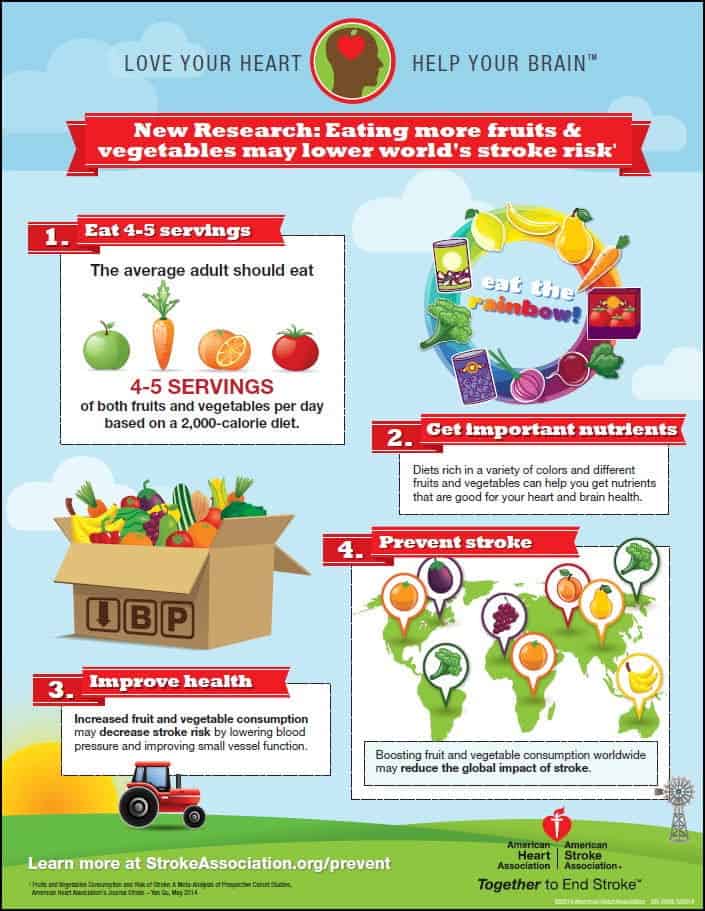
A study published in May of 2014 indicated that eating more fruits and vegetables could lower the world’s risk of a stroke. Below is an infographic produced by the American Heart Association and American Stroke Association to give awareness to why fruits and veggies are so important for our diets. The infographic details the recommended servings per day, the essential nutrients for heart health, and how fruits and vegetables lower blood pressure to improve small vessel function.

fruits and veggies strokes heart association


See infographic here: www.strokeassociation.org

https://nutrifusion.com/wp-content/uploads/2022/05/NutriFusion-Logo-New-1030x251.png 0 0 NF Admin https://nutrifusion.com/wp-content/uploads/2022/05/NutriFusion-Logo-New-1030x251.png NF Admin2016-11-10 12:12:032016-11-10 12:12:03Infographic: Eating Fruits & Veggies Lowers Stroke Risk

Tyson Meat Company Invests in Plant Protein with Beyond Meat

in Consumer Packaged Goods, Food Business, Health & Nutrition

People are now shying away from eating so much meat. Some nutrition experts believe that eating too much meat can cause serious, long-term health problems. New companies developing plant-based meat alternatives are racing to create the next big product in “meat.”

As one of the largest meat processors in the country, Tyson Foods shocked consumers when they decided to embrace plant proteins. They invested in the vegan “meat” company, Beyond Meat.  Beyond Meat is the company that brought the market, the Beyond Burger, which is a plant-based burger that looks and tastes like the real thing. Senior vice president in charge of strategy and new ventures, Monica McGurk, noted that the quality of the plant-based burger is amazing and Tyson Foods wants to diversify their food business.

Why Plant-Based Proteins?

There is a growing movement of vegetarianism and veganism in the United States. As more American consumers are eating more plant-based foods, many traditional meat manufacturers are thinking of new ways to grow share of the new plant-based market.

According to the Plant Based Foods Association, businesses in the country such as Califia Farms, Heidi Ho, and Beyond Meat have grown to at least $4.9 billion in sales last June.  The investment that Tyson Foods poured into Beyond Meat came as a shock because a meat company suddenly decided to invest in a plant-based business. Tyson must have seen the lucrative business of plant-based proteins.

Why did Tyson Diversify its Portfolio?

In 2014, Pinnacle Foods which produces canned meat products bought Gardein which creates a line of plant-based products. This creates a positive view that the meat industry is recognizing the movement of veganism. Although it may not cause the complete shift in meat to plant-based proteins, it is still a good sign for vegans and vegetarians all over the world.

However, this particular type of investment will also raise eyebrows, particularly among ardent vegetarians and vegans. Ethan Brown, founder, and CEO of Beyond Meat, said that many vegans see the ethical problem of a meat company investing in a plant-based business. But he is hopeful that this action can make plant-based meats become part of the mainstream decision of many consumers. Such investment is a great way for customers to enjoy plant-based protein in their daily diet.

Do Consumers Want More Plant-Based Meat Alternatives?

So, will such kind of investment be welcomed by many users? In a research conducted by Midan Marketing and Meatingplace, 70% of meat-eating respondents said that they could use meat substitutes in place for real meats at least once a week. The remaining number of correspondents are already using meat substitutes frequently.

The reasons why there are a huge following and acceptance of plant-based proteins in the United States is mainly for health. However, other people do it for the ethical reasons. Whatever the reasons may be, Tyson Foods investment in Beyond Meat proved that there is an emerging market for this particular niche.

Inspired by: www.nytimes.com

https://nutrifusion.com/wp-content/uploads/2022/05/NutriFusion-Logo-New-1030x251.png 0 0 NF Admin https://nutrifusion.com/wp-content/uploads/2022/05/NutriFusion-Logo-New-1030x251.png NF Admin2016-11-08 09:52:122016-11-08 09:52:12Tyson Meat Company Invests in Plant Protein with Beyond Meat

The Clean Label Project: Helping You Understand Your Food Beyond Its Ingredients

in Food Business, Health & Nutrition

Food manufacturing has come a long way. From the simple backyard garden, our grandparents tended before the industrial revolution to the establishment of the first grocery stores during the pre-war times. It is no wonder that the food that we are eating now is very different from what our grandparents ate in their time. Today, food is not as authentic and filled with harmful substances like antibiotics, BPA, and arsenic.

The Clean Label Project was established to understand better all of the ingredients found in the food we are eating. Led by Doug Porter, this non-profit organization aims to test different food items for the presence of harmful substances in the hopes of providing cleaner food supply to consumers.

What Is the Clean Label Project?

Founded two years ago, the Clean Label Project is a non-profit group that is concerned about the purity and safety of today’s food. It is led by people from all walks of life, but most of them have a background in the food industry. The group aims to answer questions related to the origin of our foods and increase the transparency of food issues such as GMO labeling, revamping the nutrition facts, and implementing the Food Safety Modernization Act.

The group has analyzed baby food since it was founded and looked at the ingredients as well as the composition of the products. They also examined the normal levels of substances found in food so that they can develop an algorithm that will help food manufacturers know the appropriate amount of elements that they can use. It is their mission to create a society where people are not worried about what’s inside their food.

How Do Toxic Substances Get into Our Food?

With the high demand of consumers for clean food, food manufacturers should improve their products by providing traceability for their customers. Another mystery that The Clean Label Project wants to solve is how the harmful substances find their way into the food that we eat.

There are many ways food can be contaminated by harmful substances. The industrialization of agriculture may contaminate crops and produce with pesticides and fertilizers. On the other hand, other ways that foods may have contaminated may come during the processing, packing, and transportation of the food.

Pinpointing where these harmful substances come from can help food manufacturers take steps in improving their processes to solve the problem down the line completely.

Transforming The Concept of Clean Labeling

Clean labeling is not just about knowing the types of ingredients used in making a particular food product. It also knows where your food comes from and how it is made with the Clean Label Project, the non-profit organization aims to transform how people look at the concept of clean labeling.

Using clean labeling does not only reflect the quality of food that manufacturers make, but it also reflects their sincerity in helping consumers attain good health through the foods that they eat.

Inspired by fooddive.com

https://nutrifusion.com/wp-content/uploads/2022/05/NutriFusion-Logo-New-1030x251.png 0 0 NF Admin https://nutrifusion.com/wp-content/uploads/2022/05/NutriFusion-Logo-New-1030x251.png NF Admin2016-10-31 10:26:162016-10-31 10:26:16The Clean Label Project: Helping You Understand Your Food Beyond Its Ingredients

World Health Organization Supports Taxing Sugary Beverages

in Beverages & Drinks, Health & Nutrition, Kid's Health

In 2013, global beverage volume sales reached 994.1 billion liters. The continuous rise of beverage drinks has consequently lead to a rise in the rate of obesity. According to Dr. Douglas Bettcher from the World Health Organization’s Department for the Prevention of Non-Communicable Diseases, consumption of free sugars from sugary drinks have contributed to the global obesity and diabetes pandemic.

Since 1980 the prevalence of obesity has more than doubled to 39% of people around the world in 2014. To make matters worse, there are an estimated 42 million children under the age of five who are suffering from obesity. Especially those in developing countries like Africa and Asia.

Do We Need Sugary Beverages?

Nutritionists argue that while most of us have a sweet tooth, we don’t necessarily need free sugar in our diet. In fact, WHO recommends that people should consume free sugar below 10% of their energy needs. This means that an average adult may consume a single serving of sugary drink per day or a total volume of 250mL.


Dr. Francesco Branca from the WHO’s Department of Nutrition for Health and Development noted that foods with free sugar have high caloric value. So instead of consuming free sugar, it should be avoided like the plague to improve health conditions.

Taxation Is the Solution

The alarming rise of obesity and diabetes all over the world is taking a toll on the global healthcare setting. The World Health Organization suggested that implementing higher taxation on sugary drinks to curb these two main health problems.

In the report released by the WHO titled Fiscal Policies for Diet and Prevention of Non-Communicable Diseases (NCDs), reduction of the consumption of free sugars as well as calories are seen as the answer to the global obesity pandemic. Free sugars include simple sugars like fructose and glucose as well as disaccharides like table sugar and sucrose. These are added to food by the food manufacturers when creating their products.

But how to do we decrease the amount of sugary drink consumption? WHO recommend adding high taxes to these sugary beverages to discourage people from consuming too many sugary drinks. Thereby reducing their risk to obesity as well as other sugar-related diseases like tooth decay.

People who are affected by obesity and diabetes often fall into the low-income level. Moreover, sugary drinks are often consumed by people in the low-income levels too! Taxation of sugary drinks will most likely affect these people, but they will also be the ones to gain the highest health benefits.

Other Solutions

Aside from implementing higher taxation of sugary drinks, changes in fiscal policies to improve health should be undertaken. The World Health Organization recommended governments to subsidize fruits and vegetables to reduce the price by 30%. This will encourage more people to buy fruits and vegetables. Moreover, higher taxes on foods high in saturated fats and salt should also be implemented. Coupled with reduced consumption of sugary drinks, these fiscal policy changes will produce a lot of benefits for the health of individuals, globally.

Inspired by http://www.who.int

https://nutrifusion.com/wp-content/uploads/2022/05/NutriFusion-Logo-New-1030x251.png 0 0 NF Admin https://nutrifusion.com/wp-content/uploads/2022/05/NutriFusion-Logo-New-1030x251.png NF Admin2016-10-21 10:52:432016-10-21 10:52:43World Health Organization Supports Taxing Sugary Beverages

Consumers Looking for More Plant-Based Proteins

in Beverages & Drinks, Consumer Packaged Goods, Food Business, Health & Nutrition, Supplements & Nutraceuticals

Where do you get your protein? The usual answer would be from meat and other animal products. Proteins are also found in plant sources, and they are gaining a lot of traction. In fact, 63% of Americans want to eat healthy by better understanding the ingredients found in their food. The preference of most consumers for natural and simple foods has led them to explore other food alternatives such as plant-based proteins.

Plant-Based Protein Beast Burger Beyond Meat NutriFusionPlant-Based Pulses: The New Meat

Although the sales of lean proteins in the United States have increased by 4.8% or $19.6 billion, many consumers are also buying pulses or grain legumes. Pulses are edible seeds made up of aggregates of peas, lentils, chickpeas, and other dried beans.

In a survey conducted by Nielsen, about 61% of the respondents opted for foods that have both high protein and fiber content where pulses are clearly spot on. And with the many health benefits attributed to eating pulses, it is no wonder why the United Nations declared this year (2016) as the International Year of Pulses.

Pulses are not only perfect for vegans and vegetarians. In fact, even carnivores can also take advantage of the many health benefits of pulses. But aside from nutritional and health benefits, people are now shifting to pulses because of its taste and eating convenience.

Why Are People Eating Pulses?

Health is becoming a priority for many American consumers these days. One of the most popular superfoods for health-conscious individuals is pulses.

There are different categories of consumers that consume pulses, and they vary in their income levels, dietary preferences, and life stages. However, the recent study conducted by Nielsen Homescan Consumer Moments indicated that most people who consume lentils are women who make up 70% of the respondents.

It is also important to take note that the manner of consumption of pulses indicated that consumers eat them at home.  In the study, 86% of the respondents consume legumes at home, and more are preparing them not as side dishes but as the main entrée. This means that many consumers today are taking control of their personal health by making time to cook their meals.


The Future of Pulses

Although there has been a rapid increase in popularity, the overall sales of some legumes have dropped significantly this year. For instance, while lentils and chickpeas are still dominating the sales chart with 11.1% and 64% growth respectively, other lentils like red, black, and white beans are on a steady decline.

The market for pulses in the United States is still very young. While the market is still experiencing slow growth for some of the seeds, well-known seeds like lentils and chickpeas are dominating the market. As more and more people appreciate the benefits of eating lentils, this food trend will continue to persist for years to come. It’s up to manufacturers to develop new plant-based alternatives that are tasty and excite consumers.

Inspired by nielsen.com

https://nutrifusion.com/wp-content/uploads/2016/10/many-nuts-on-sack-Q6RV2JB-min.jpg 1030 1547 NF Admin https://nutrifusion.com/wp-content/uploads/2022/05/NutriFusion-Logo-New-1030x251.png NF Admin2016-10-19 09:17:312016-10-19 09:17:31Consumers Looking for More Plant-Based Proteins

The Medical Food Trend is Growing

in Consumer Packaged Goods, Food Business, Health & Nutrition

Hippocrates once said, “Let food be thy medicine and medicine be thy food.” Despite the advancements in medical technology, many people are now considering medical food and nutrition to treat diseases and improve health conditions.

In a survey conducted by Nielsen, 39% of American households have someone who suffers from a particular ailment. And with the aging population increasing, chronic diseases will only grow in the coming years. Traditionally, people have turned to medications to solve these problems.

According to the Nielsen’s Global Health and Ingredient Sentiment Survey, 70% of consumers worldwide and 60% of the American respondents noted that they are actively making choices for their health to avoid different conditions like diabetes, high blood pressure, obesity, and high cholesterol.

What is Medical Food?

Medical food is a new concept, but it is defined as food formulated for the dietary management of diseases with distinct nutritional needs that a traditional diet cannot fulfill. Medical food should be nutritionally complete and are designed to meet the distinct nutritional requirements of particular patients.

Companies like Hormel and Nestlé are now looking into medical foods to help their consumers manage their ailments through nutrition. Manufacturers want to join the niche of medical food because of the rising trend. Food brands who are delving into medical food are looking into producing foods intended for patients suffering from obesity, lactose intolerance, diabetes, Crohn’s disease, and gluten intolerance. Food companies understand that being health-conscious is one thing but using medical food is a safer way to treat chronic illness.

The Future of Medical Food

The concept of medical foods is still in its infancy stage, but many question its future. With many people suffering from chronic diseases, consumers are looking for ways on how to manage their conditions without relying too much on conventional medicine and treatments.

Medical foods will go through a lot of scrutiny than conventionally processed foods. The extra attention that medical food gets will not only be focused on its nutrition claims, but also its safety as well as marketing. Marketing is critical because brands should not sell medical foods that fail to meet its promises.

The U.S. Food and Drug Administration is responsible for regulating medical foods under the Food Drug and Cosmetic Act Regulations 21 CFR 101.9(j) (8). The regulations for medical foods is not yet that strict, so food companies are not required to get approval by the FDA nor undergo premarket review. Moreover, they are exempted from getting labeling requirements for its health claims. Although the regulations for medical foods are not that stringent, they will surely change as the market expands. Medical food has a bright future but will face challenges from the FDA and consumers as the industry niche grows.

Inspired by http://www.fooddive.com

https://nutrifusion.com/wp-content/uploads/2016/10/unrecognizable-nutritionist-woman-with-fruit-PJLCYWP-min.jpg 1030 1545 NF Admin https://nutrifusion.com/wp-content/uploads/2022/05/NutriFusion-Logo-New-1030x251.png NF Admin2016-10-13 08:50:372016-10-13 08:50:37The Medical Food Trend is Growing

American Meat Consumption at Highest Point in 40 Years

in Food Business, Health & Nutrition

Meat is a staple on the American dinner table. In fact, the per capita consumption of meat in the United States last year was 5% higher compared to previous years. According to the research firm Rabobank, the average American now consumes around 193 pounds of meat last year which is higher than the 184 pounds recorded in 2012. Rabobank believes this is the peak in American meat consumption over the past 40 years.

Reasons Behind the Growth

In the same study, consumers consumed more chicken than other types of meat, and that trend is sure to continue. The main reason for higher consumption is the stronger U.S. dollar. With a stronger dollar, more people have the capacity to afford meats. Moreover, strong demand empowers the industry to increase their production.

Rabobank also projected that the meat consumption in 2018 would be more than 200 pounds annually per capita. The expanding meat and poultry industry will lead to lower prices which will influence the high consumption of meat in the future.

A Closer Look at Meat Consumption

Currently, the meat of choice for most Americans is chicken. Consumption of dressed chicken is at its highest with 89 pounds annually. This is followed by 54 pounds of beef and 50 pounds of pork consumption per capita annually. Chicken meat is very appealing to American consumers because it is cheaper than pork and beef. This is the reason why many fast food restaurants like Chipotle and KFC are serving chicken dishes to their customers. Moreover, people who are looking for lower calorie meals with high protein turn to chicken.

Beef consumption in the United States has declined because of its expensive price tag. While agricultural technology allowed livestock farmers to increase their meat production, cattle raising remained expensive because cows need to eat grain as well as require more grazing land than pork and chicken. These factors influence the high price of beef. Also, many people believe that the consumption of beef is less healthy because of the many research studies on red meat.

Pork consumption, on the other hand, has remained flat for many years. Aside from being dubbed as an unhealthy type of meat, the reason for the low consumption is probably due to cultural and religious practices of a large population of Islam and Jewish people in the United States.

Meats are now becoming a favorite snack option. In fact, most American consumers are now munching on jerky and meat sticks.

The massive consumption of meats in the United States indicates that the country has come a long way over the last 40 years. Although this shows an improved meat economy in the following years, large consumption of meats may also equate to increased health risks.

Inspired by marketwatch.com

https://nutrifusion.com/wp-content/uploads/2022/05/NutriFusion-Logo-New-1030x251.png 0 0 NF Admin https://nutrifusion.com/wp-content/uploads/2022/05/NutriFusion-Logo-New-1030x251.png NF Admin2016-10-05 09:21:482016-10-05 09:21:48American Meat Consumption at Highest Point in 40 Years
Page 46 of 54«‹4445464748›»

NUTRIFUSION®

GrandFusion® is a blend of fruits and/or vegetables that can significantly increase the nutritional profile and, therefore, the marketability of food, beverage, pet, and snack products.

Categories

  • Animal Nutrition
  • Beverages & Drinks
  • Consumer Packaged Goods
  • Corporate Partnerships
  • Corporate Updates
  • Featured
  • Food Business
  • Food Retail
  • GLP-1
  • Health & Nutrition
  • Infographics
  • Kid's Health
  • News
  • Press Releases
  • Product Announcements
  • Recipes
  • Supplements & Nutraceuticals
  • Uncategorized

ABOUT NUTRIFUSION®

NutriFusion® provides the nutrient-rich benefits of fruits and vegetables in everyday food products through whole non-GMO foods to create its concentrated micronutrient and phytonutrient-rich food ingredient blends.

Search NutriFusion

Search Search

SEAL OF AUTHENTICITY

NUTRIFUSION® CERTIFICATES

NutriFusion Cert Bar

Categories

  • Food
  • Beverages & Drinks
  • Pet Food
  • Nutraceuticals
  • Contact Us
  • Privacy Policy

© Copyright 2026 NutriFusion LLC | All Rights Reserved.

Scroll to top Scroll to top Scroll to top