
Why Protein Shakes Formulated with Whole Food Vitamins Outperform Synthetic Alternatives
Protein shakes have become one of the most competitive categories in functional nutrition. The global protein supplement market was valued at over $21 billion in 2023 and is projected to grow at a compound annual growth rate of 8.7% through 2030, driven largely by demand in premium wellness and sport-recovery segments.
Manufacturers face pressure to differentiate on more than protein content alone. Increasingly, the micronutrient story matters as much as the macros. The question for formulators is no longer just how much protein, but what surrounds it, and whether the vitamin and mineral system supporting the product can hold up to scrutiny from buyers, retailers, and label-conscious consumers.
What Separates Whole Food Vitamins from Synthetic Fortification
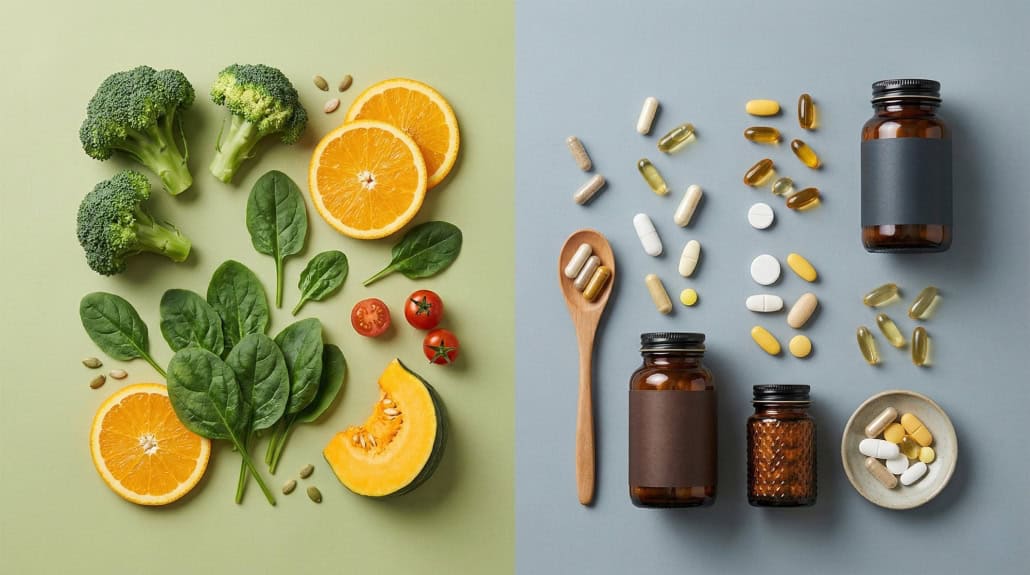
Synthetic vitamins are produced through chemical synthesis and added to finished products as isolated compounds. They meet DV requirements on the label, but they lack the cofactors, phytonutrients, and naturally occurring compounds present in whole-food sources.
Those compounds influence how vitamins are recognized, transported, and utilized by the body. Research on carotenoid bioavailability has shown that dietary factors, including fat, fiber, and food matrix structure, significantly affect how well nutrients are absorbed. In practical terms, this means an isolated vitamin C compound behaves differently in the body than vitamin C arriving within a spinach or orange matrix.
For manufacturers, this distinction carries both a technical and a commercial implication. It changes what you can honestly say about the product, and how convincingly you can say it to a buyer who reads labels.
Key differences between whole food and synthetic vitamin systems:
- Whole food vitamins retain natural cofactors and phytonutrients from their source ingredients
- Synthetic vitamins are chemically isolated and lack surrounding food matrix compounds
- Bioavailability research indicates food-matrix nutrients may be more efficiently utilized than their isolated synthetic equivalents
- Whole food sources produce ingredient statements with recognizable names like broccoli, spinach, and orange rather than chemical compound names
Why Micronutrient Sourcing Matters for Protein Shake Positioning
The protein shake segment has shifted considerably. Early formulations competed on protein grams and flavor. The current competitive environment requires a more complete nutritional argument, particularly in premium, wellness, and sport-recovery segments where buyers compare labels carefully.
A protein shake that lists broccoli, spinach, orange, and pumpkin as vitamin sources tells a fundamentally different story than one showing ascorbic acid, pyridoxine hydrochloride, and cyanocobalamin. That difference shows up in retail placement conversations, brand credibility, and the confidence with which a marketing team can explain the product to a consumer.
It is also worth noting that micronutrient insufficiency is more widespread than commonly assumed. Research published in the British Journal of Nutrition found that vitamin intakes below recommended levels are common across representative Western populations, even among people who consume adequate calories. For protein shake brands targeting health-conscious consumers, this is relevant context: the micronutrient layer of the product is not a secondary consideration.
Clean-label formulation in this category also comes with a sourcing complexity problem. Adding whole-food-derived vitamins and minerals individually requires managing:
- Multiple ingredient suppliers and vendor relationships
- Multiple certificates of analysis per production run
- Multiple storage SKUs and associated handling costs
- A lengthier, more complex ingredient declaration
A consolidated premix system reduces that complexity without sacrificing the clean-label declaration. NutriFusion's 6 Nutrient Fruit and Vegetable Blend is one example of how multiple nutrients from named food sources can be delivered in a single powder, simplifying both procurement and the ingredient panel.
Formulation Considerations for Protein Shakes with Whole Food Nutrients
Incorporating whole food vitamin systems into protein shakes requires attention to a few practical variables.

Sensory impact: Whole food powders can carry flavor and color from their source ingredients. At typical use levels this contribution is often negligible, but it should be evaluated in the protein shake matrix, particularly in lighter or unflavored bases. Suppliers should be able to provide sensory data at realistic inclusion rates.
Processing tolerance: Protein shakes that go through high-shear mixing, pasteurization, or aseptic processing require vitamin systems that can maintain declared levels through those conditions. Formulators should request stability data across relevant processing parameters, not just an ingredient spec sheet. NutriFusion's certifications and quality documentation support downstream label compliance, which is a practical requirement for brands making vitamin or mineral content claims on finished product.
Label claim alignment: If the product makes vitamin or mineral content claims, the values must be supported by the finished product, not just the premix specification. That means working with suppliers who understand the difference between an ingredient claim and a finished-product claim, and who can support formulation testing at the production scale.
The Commercial Case for Whole Food Vitamins in Protein Shakes
A protein shake fortified with whole food vitamins costs more to produce than one using conventional synthetic fortification. That cost difference is real and should be factored honestly into margin planning.
What it buys is a cleaner ingredient declaration, a more credible nutrition story, and a meaningful positioning advantage in segments where label transparency drives purchase decisions. With the protein supplement market projected to exceed $42 billion by 2030, the brands that earn durable shelf placement in premium and functional channels will be those that can back their nutrition claims with an ingredient system that holds up to scrutiny.
Synthetic vitamins deliver on a nutrition panel but underdeliver on the narrative that increasingly drives category differentiation. Formulators who want to build a stronger product around protein should evaluate whether the vitamin system they are using is helping, or quietly working against the brand story they are trying to tell.
How NutriFusion Applies to Protein Shake Formulation
NutriFusion's GrandFusion blends are built for applications like protein shakes, where clean-label positioning, micronutrient density, and processing stability all need to work together.
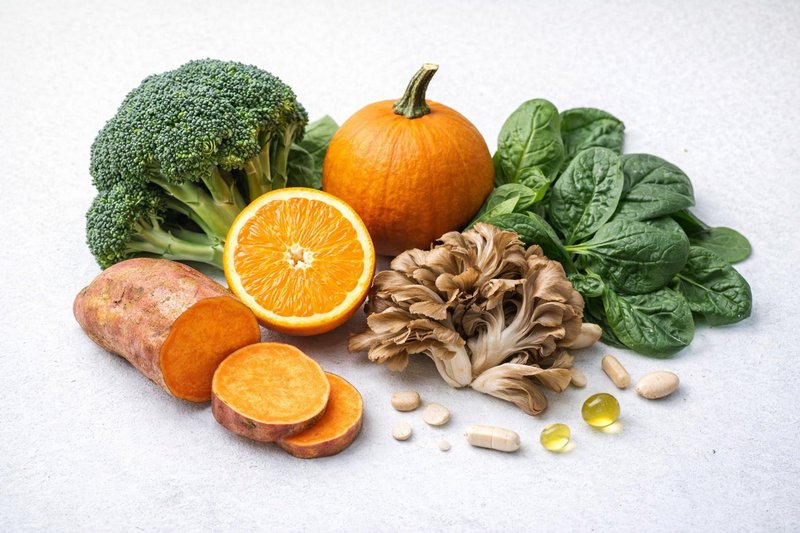
The blends are derived from whole-food sources, including broccoli, spinach, sweet potato, orange, pumpkin, and maitake mushroom, and concentrated to deliver meaningful DV contributions at a small use-level dose.
Options suited for protein shake formulation:
- The 21 Vitamin and Mineral Blend (NF-82333) delivers 100% DV for 21 nutrients in just 491 mg, integrating cleanly into a shake formula without adding bulk or meaningful sensory interference.
- The 12 Nutrient Fruit and Vegetable Blend (NF-2782) offers a more targeted option at 50% DV for 12 vitamins per 225 mg.
Both blends consolidate multiple nutrients into a single powder, reducing ingredient line items, purchase orders, and storage SKUs without compromising what the label can say. NutriFusion also supports custom blend development for brands with specific nutrient targets, and offers minimum orders starting at one pound, which supports pilot-scale formulation work before committing to full production volumes.
Rethink your vitamin system before your competitors do. See how NutriFusion simplifies clean-label formulation at scale: https://nutrifusion.com/
References
- Grand View Research. 2024. "Protein Supplement Market Size, Share and Trends Analysis Report." Grand View Research. https://www.grandviewresearch.com/industry-analysis/protein-supplements-market
- van het Hof, K.H., West, C.E., Weststrate, J.A., and Hautvast, J.G. 2000. "Dietary Factors That Affect the Bioavailability of Carotenoids." Journal of Nutrition. https://doi.org/10.1093/jn/130.3.503
- Troesch, B., Hoeft, B., McBurney, M., Eggersdorfer, M., and Weber, P. 2012. "Dietary Surveys Indicate Vitamin Intakes Below Recommendations Are Common in Representative Western Countries." British Journal of Nutrition. https://doi.org/10.1017/S0007114512001808
- Schlueter, A.K., and Johnston, C.S. 2011. "Vitamin C: Overview and Update." Journal of Evidence-Based Complementary and Alternative Medicine. https://journals.sagepub.com/doi/10.1177/1533210110392951
- FoodNavigator-USA. 2024. "NutriFusion's Flexible Minimum Orders Resonate with Emerging Brands." William Reed Business Media. https://www.foodnavigator-usa.com/Article/2024/08/28/nutrifusion-s-flexible-minimum-orders-resonate-with-emerging-brands