How to Read Dog Food Nutrition Facts for Better Ingredient Choices

Most dog owners scan the front of the bag, check the protein percentage, and call it a day. But dog food nutrition facts tell a much more complete story, and understanding how to read them matters whether you're a pet owner choosing a product off the shelf or a formulator deciding what goes into one.

Pet food has its own version of the ultra-processed food problem. Just like breakfast cereals or fast food marketed to humans, many commercial dog foods are engineered for palatability, shelf life, and cost efficiency, often at the expense of genuine nutritional value. Knowing what to look for on the label is the first step toward making better choices.

What the Guaranteed Analysis Actually Tells You

The guaranteed analysis panel lists minimum percentages for crude protein and crude fat, and maximum percentages for crude fiber and moisture. These are floor-and-ceiling figures, not exact values, which means the actual nutrient content in the bag can vary.

For pet food manufacturers and formulators, these numbers represent the baseline of regulatory compliance. For consumers, they're a starting point, not the whole picture. A product can meet minimum protein thresholds while still relying on low-quality protein sources or synthetic fortification to hit its numbers on paper.

What the guaranteed analysis does not tell you:

  • The bioavailability of the nutrients listed
  • Whether vitamins and minerals come from whole-food or synthetic sources
  • How processing has affected the actual nutrient content at point of consumption

This is where ingredient sourcing and formulation decisions become commercially significant for brands, and practically significant for dog owners.

How to Decode the Ingredient List

Ingredients on dog food nutrition facts labels are listed by weight before processing. This creates a common confusion: "chicken" listed first sounds impressive, but chicken is roughly 70% water. After cooking, its actual contribution to the final product may be smaller than it appears.
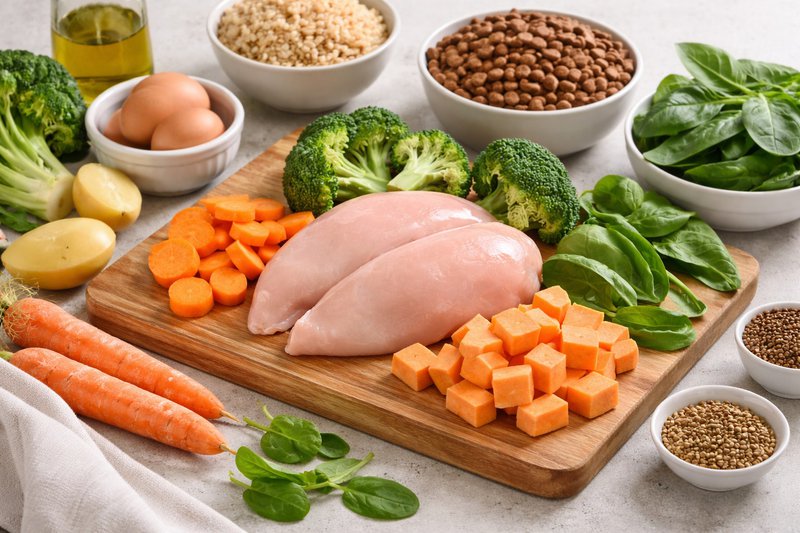
Assortment of whole food ingredients like chicken, carrots, spinach, and sweet potatoes arranged for dog food preparation.

A few things worth watching on the ingredient list:

  • Named protein sources (chicken, salmon, lamb) are more informative than generic terms like "meat meal" or "animal digest"
  • Vitamin and mineral listings near the bottom of the ingredient list often indicate synthetic fortification added back after processing
  • Ingredient splitting, where a single ingredient like peas appears as "peas," "pea protein," and "pea starch" separately, can inflate where it appears on the list

Pet food formulators are well aware of these dynamics. The challenge is building a product that performs nutritionally, reads cleanly on the label, and holds up through manufacturing.

According to the Association of American Feed Control Officials (AAFCO), dog food labeled "complete and balanced" must meet established nutrient profiles either through formulation or feeding trials. Meeting those profiles with whole-food-derived ingredients, rather than synthetic premixes, requires more deliberate sourcing and formulation work, but it produces a meaningfully different product story. NutriFusion's plant-based pet nutrition blends are designed specifically for this kind of application.

The Problem With Synthetic Fortification in Pet Food

Most commercial pet foods, particularly ultra-processed formats like extruded kibble, lose significant micronutrients during high-heat processing. The standard industry fix is to add synthetic vitamins back after the fact. This approach satisfies label requirements, but it does not replicate what whole-food nutrition delivers.
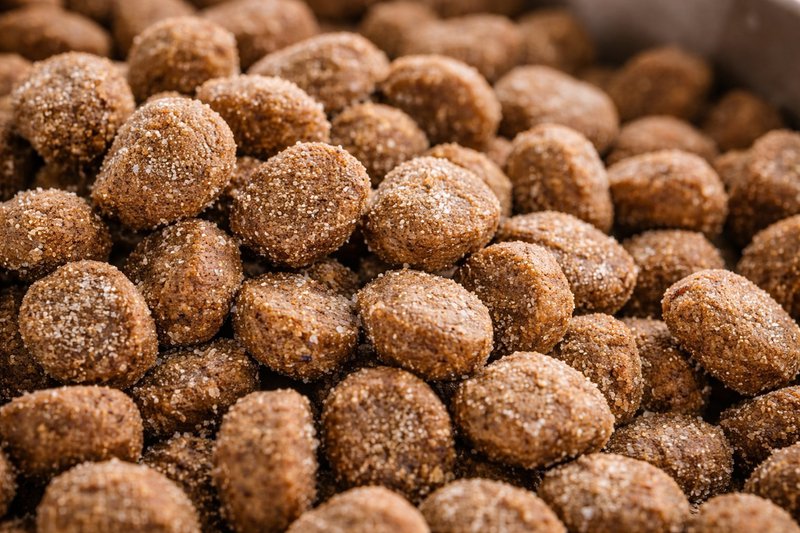
Close-up of dry dog kibble showing powder coating and processed texture.

Synthetic vitamins are cheaper and easier to source, but they differ structurally from vitamins found in fruits, vegetables, and botanicals. Bioavailability, or how effectively a nutrient is absorbed and used by the body, can vary considerably depending on the source. This gap matters more in pet food than many formulators acknowledge, because dogs, like humans, rely on consistent micronutrient intake for immune function, coat health, joint support, and long-term wellness.

For brands formulating in the better-for-pet space, the sourcing decision is increasingly part of the product story. Pet owners are reading ingredient lists more carefully than they used to, and "broccoli, spinach, sweet potato" communicates something very different from a string of synthetic chemical names.

What Better Dog Food Nutrition Facts Look Like in Practice

A product with strong dog food nutrition facts typically shares a few characteristics across its label:

  • Named, whole-food protein sources in the top positions
  • Recognizable fruits, vegetables, or botanicals contributing to the vitamin and mineral panel
  • A short, readable ingredient list without heavy reliance on synthetic vitamin premixes
  • AAFCO compliance confirmed by feeding trial or nutrient profile formulation

For consumers, these signals are worth knowing. For pet food manufacturers, they represent a formulation strategy that commands a premium, supports stronger marketing claims, and aligns with where the better-for-pet category is heading.

The shift away from synthetic fortification in pet food mirrors what is happening in human food. Brands that get ahead of it now, with sourcing partners and formulation approaches already in place, are better positioned as clean-label demand continues to grow.

​How NutriFusion Fits Into Pet Food Formulation

NutriFusion supplies fruit and vegetable-derived vitamin and mineral blends purpose-built for pet food manufacturers and formulators. Its blends are plant-based, bio-organic, bioavailable, and stable through processing, which addresses one of the central challenges in pet food: nutrient survival after extrusion, baking, or retort.

The company's GrandFusion premix system delivers meaningful daily value percentages at low inclusion rates. For example, its 21 Vitamin and Mineral Blend delivers 100% Daily Value for 21 nutrients in just 491 mg, under half a gram of powder in a finished formulation. That concentration level matters for formulators working within tight inclusion constraints.

Key formulation advantages for pet food applications include:

  • Whole-food ingredient statement: ingredients like broccoli, spinach, kale, and mushrooms appear on the label rather than synthetic chemical names
  • Clean-label compatibility: no synthetic additives, excipients, or preservatives
  • Processing stability: nutrients are designed to survive manufacturing conditions, not just exist in the premix
  • Certifications: Kosher, Halal, SQF, and cGMP compliance for brands with strict sourcing requirements
  • Low minimum orders: starting at 1 pound, making it accessible for emerging brands in the early formulation and pilot stages

For brands building a credible nutrition story in the pet space, the ingredient source is part of the claim. NutriFusion's blends are aligned with the certifications and compliance standards that downstream pet food brands increasingly need.

​Explore how better sourcing can reshape your product from the inside out: https://nutrifusion.com/

References

  1. Association of American Feed Control Officials (AAFCO). 2024. "AAFCO Methods for Substantiating Nutritional Adequacy of Dog and Cat Foods." AAFCO. https://www.aafco.org/wp-content/uploads/2023/01/Model_Bills_and_Regulations_Agenda_Midyear_2015_Final_Attachment_A.__Proposed_revisions_to_AAFCO_Nutrient_Profiles_PFC_Final_070214.pdf
  2. FoodNavigator-USA. 2024. "NutriFusion's Flexible Minimum Orders Resonate With Emerging Brands." FoodNavigator-USA. https://www.foodnavigator-usa.com/Article/2024/08/28/nutrifusion-s-flexible-minimum-orders-resonate-with-emerging-brands
How Skin and Coat Plant-Based Supplements for Dogs Help Support Healthy Fur and Skin

​Dog owners and pet food formulators are paying closer attention to what goes into skin and coat products. Dull fur, excessive shedding, dry or flaky skin, and chronic itching are among the most common reasons pet owners seek targeted nutrition solutions. Behind many of these issues is a micronutrient gap that standard kibble or synthetic fortification often fails to close.

Plant-based supplements for dogs, built on whole-food-derived vitamin and mineral blends, offer a credible alternative. For pet food manufacturers developing premium products, this is both a formulation challenge and a real market opportunity. For dog owners choosing supplements directly, it raises an important question: not just what a product contains, but where those nutrients actually come from.

Why Skin and Coat Health Reflects Overall Nutrition

Skin is the largest organ in a dog's body, and its condition is often the first visible signal of nutritional deficiency. A dull coat or persistent scratching is rarely just a surface problem.

Key nutrients for skin and coat function include:

  • Vitamin A (as beta carotene): Supports cell turnover and healthy skin barrier function
  • Vitamin E: An antioxidant that can help protect skin cells from oxidative damage
  • B vitamins (B1, B2, B6, Biotin): Involved in fatty acid metabolism and keratin production, both of which affect coat texture and strength
  • Vitamin C: Supports collagen synthesis, contributing to skin elasticity and repair
  • Vitamin D: Plays a role in immune regulation, including skin-level immune responses

According to a 2021 review published in Veterinary Dermatology, nutritional deficiencies in vitamins A, E, and the B-complex group are among the most common dietary contributors to poor coat quality in dogs. When these nutrients are missing or poorly absorbed, skin and coat quality declines before other health markers do.

NutriFusion's plant-based pet blends are formulated specifically for this challenge, offering standardized nutrient profiles derived from fruits, vegetables, and mushrooms aligned with AAFCO pet nutrition standards.

The Bioavailability Problem With Synthetic Vitamins

Most commercial pet food and supplements for dogs is fortified with synthetic vitamins. These isolates may be chemically similar to the vitamins found in whole foods, but they do not always behave the same way once consumed. Bioavailability, meaning how much of a nutrient the body can actually absorb and use, varies significantly between synthetic and whole-food-derived sources.

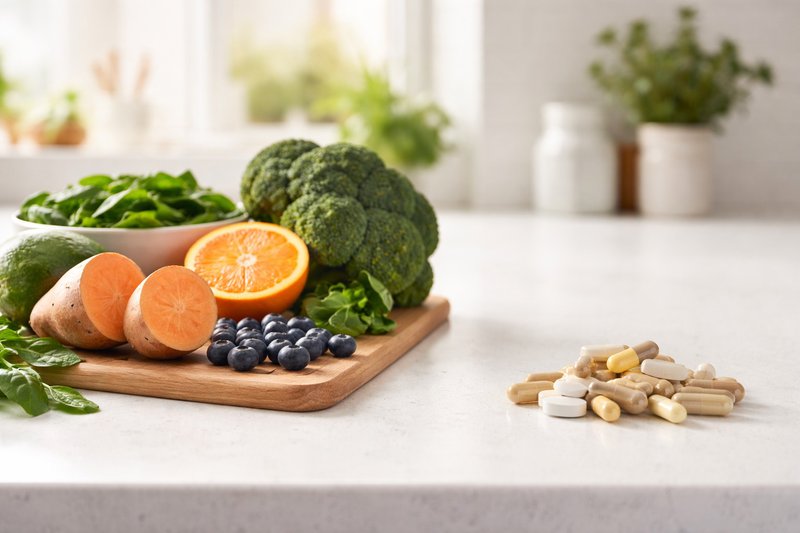
Fresh fruits and vegetables beside capsules on a clean surface showing natural versus synthetic nutrient sources and supplements for dogs

Nutrients consumed within their natural food matrix tend to be absorbed more efficiently than isolated synthetic forms. The co-factors, enzymes, and phytonutrients present in plant-based sources support absorption in ways that isolated compounds cannot fully replicate.

The U.S. pet supplement market was valued at approximately $1.05 billion in 2023, with skin and coat products among the top-selling categories. That level of consumer spending reflects real demand, but it also raises the bar for what manufacturers are expected to deliver. Whole-food-derived vitamin blends support cleaner ingredient statements, stronger label claims, and more differentiated positioning in a competitive market.

What to Look for in Plant-Based Supplements for Dogs

Not all plant-based supplements for dogs are equal. For manufacturers building a skin and coat formula, and for pet owners evaluating labels, these markers matter:

  • Ingredient source transparency: The ingredient list should name the actual food sources, such as spinach, sweet potato, or sunflower seeds, rather than vague terms like "vitamin blend."
  • Nutrient stability through processing: Vitamins derived from produce are sensitive to heat, light, and pH. A reliable plant-based blend should have documented stability through typical manufacturing conditions. NutriFusion's FDA-hosted GRAS Notice GRN 769 demonstrates that their blends maintain declared nutrient levels through processing and shelf life, including in cooked applications like pasta.
  • Concentrated nutrient density: Effective supplementation at practical inclusion rates requires concentrated blends. NutriFusion's 21 Vitamin and Mineral Blend (NF-82333) delivers 100% Daily Value for 21 nutrients in just 491 mg, a significant amount of nutrition from a very small powder addition.
  • Certifications that support downstream compliance: Kosher, Halal, SQF, and cGMP certifications signal that a supplier's manufacturing process has been reviewed against documented quality standards, which matters when brand and procurement teams evaluate ingredient sourcing.
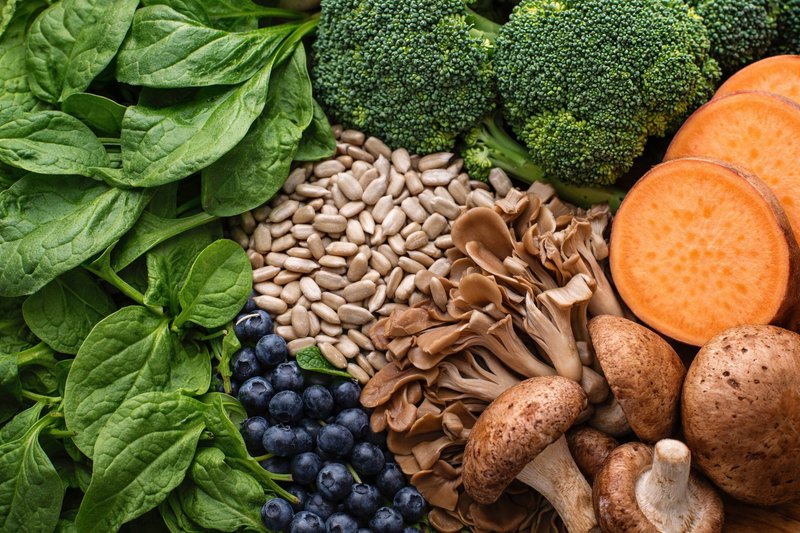
Close-up of spinach, broccoli, mushrooms, sunflower seeds, and sweet potato arranged as natural nutrient sources and supplements for dogs

How NutriFusion Supports Skin and Coat Formulation

NutriFusion's pet-focused blends bring together the specific ingredients most relevant to skin and coat outcomes:

  • Spinach and broccoli contribute beta carotene, vitamin C, and B vitamins, directly supporting skin cell maintenance and coat health
  • Sweet potato provides beta carotene and vitamin B6, which supports fatty acid metabolism in the skin
  • Sunflower seeds are a natural source of vitamin E, one of the most studied nutrients for skin antioxidant protection
  • Maitake and shiitake mushrooms contribute vitamin D2, which is difficult to source naturally in most pet food ingredient systems

These nutrients come packaged with the co-factors present in the original plant source, which supports how they interact at the cellular level rather than acting as isolated additions.

NutriFusion works with pet food manufacturers and formulators to integrate GrandFusion blends into finished formulations across a range of processing conditions. Blend customization is available for specific nutrient targets, and minimum orders start at 1 pound, making early-stage formulation and product testing accessible for brands still developing their concept. You can review NutriFusion's full certifications and quality standards to assess supplier fit for your product category.

Formulating better supplements for dogs, or choosing smarter supplements for dog, starts with the right nutrient source. Explore NutriFusion’s whole-food blends and see how they deliver real, measurable results: https://nutrifusion.com/

References

  1. U.S. Food and Drug Administration. 2018. "GRAS Notice GRN 769: Fruit and Vegetable-Derived Vitamin C Extract." FDA. https://www.fda.gov/media/127844/download
  2. U.S. Food and Drug Administration. 2017. "GRAS Notice GRN 690: Fruit and Vegetable Vitamin Extract." FDA. https://www.fda.gov/files/food/published/GRAS-Notice-GRN-690-Fruit-and-vegetable-vitamin-extract.pdf
  3. Colombini, S. and Dunstan, R.W. 2021. "Nutritional Influences on Coat and Skin Health in Dogs." Veterinary Dermatology. Wiley. https://onlinelibrary.wiley.com/journal/13653164

What to Look for in Supplements for Senior Dogs as They Age

Pet food manufacturers and formulators serving the senior dog segment are working in a market with real urgency behind it. Approximately 44% of pet dogs in the United States are classified as seniors, and that population is more prone to joint problems, cognitive decline, and nutritional gaps than younger animals. At the same time, high-heat processing destroys many of the vitamins and enzymes in commercial kibble, meaning older dogs often arrive at the bowl already behind on micronutrient intake. This deficit has fueled a massive surge in demand for supplements for senior dogs, as owners look beyond the bag to support aging vitality.

For brands developing or reformulating senior dog products, understanding which nutrients actually matter, and why ingredient quality shapes their effectiveness, is the starting point for building a credible product.

When Do Dogs Become Seniors, and What Changes?

Most veterinary nutritionists mark the senior threshold at around seven years of age, though breed and body size affect that timeline. Large breeds tend to age faster and may enter their senior years by age five or six, while smaller breeds often don't qualify until age eight or nine.

Once dogs cross into their senior years, several physiological shifts affect nutritional requirements:

  • Metabolism slows, increasing the risk of obesity if caloric intake stays the same
  • Lean body mass declines, raising the need for high-quality, digestible protein
  • Digestive efficiency drops, meaning nutrients from food are absorbed less effectively
  • Cognitive function changes, with the brain beginning to lose its ability to use glucose as efficiently as before, which can affect memory and awareness
  • Immune function weakens, increasing reliance on dietary antioxidants and micronutrients

These aren't marketing considerations. They're biological realities that formulators need to account for when selecting ingredients for senior-focused products.

Key Nutrients to Prioritize in Senior Dog Formulations

Not every nutrient carries equal weight for aging dogs. The following are the categories with the strongest evidence base and the most commercial relevance for product development.

Senior dog resting near fresh whole food ingredients used in pet nutrition

Joint Support: Glucosamine and Chondroitin

Joint deterioration is one of the most common and visible health concerns in senior dogs. Glucosamine and chondroitin help maintain cartilage integrity and support mobility in dogs experiencing stiffness or reduced range of motion. For manufacturers in the pet supplement space, joint support remains the most in-demand functional category for senior products, and ingredient quality here directly affects consumer retention.

Omega-3 Fatty Acids

Long-chain omega-3s, EPA and DHA, serve multiple functions in aging dogs. They can help reduce joint inflammation, support cardiovascular health, and play a role in cognitive function. Cornell University's veterinary nutrition team specifically highlights marine-sourced omega-3s for senior dogs, noting that increased inclusion in formulations requires careful attention to total fat balance to avoid weight gain.

Antioxidants and Micronutrients

Vitamins E, C, and A support immune function and help manage oxidative stress, which accumulates in aging tissue. Senior dogs benefit from consistent antioxidant supply, particularly as their bodies become less efficient at synthesizing or absorbing these nutrients from standard processed diets. The challenge for formulators is delivering these nutrients in a form that survives processing and remains bioavailable in the finished product.

Probiotics and Digestive Enzymes

Digestive function declines with age. Older dogs are more prone to gastrointestinal discomfort, reduced enzyme output, and imbalanced gut flora. Probiotic and prebiotic ingredients can support gut health and improve overall nutrient uptake, which matters especially when the primary diet is heavily processed.

Cognitive Support: MCT Oil and B Vitamins

Research from Purina indicates that starting around age seven, a dog's brain begins losing efficiency in using glucose as its primary energy source. Medium-chain triglyceride (MCT) oils provide an alternative fuel source for the brain and have shown measurable cognitive benefits in older dogs in multiple studies. B vitamins support neurological function and energy metabolism, making them a practical inclusion in senior blends.

Ingredient Quality is Where Senior Formulations Win or Lose

A senior dog product with the right nutrients on paper can still underperform if those nutrients aren't delivered in a form the animal can actually absorb. This is where synthetic vitamin systems, which are standard in most commercial pet fortification, create a credibility gap for brands trying to position in the premium or functional pet space.

Comparison of whole food ingredients and synthetic supplements used in pet nutrition

Bioavailability matters more in senior animals than at any other life stage. Aging dogs have reduced digestive efficiency, so the form of the nutrient, not just the presence of it on the label, directly affects what the animal actually receives. Whole-food-derived nutrients, by contrast, are structured in ways that support natural absorption pathways and are accompanied by cofactors that aid uptake.

Visit NutriFusion's pet nutrition page to review its line of fruit and vegetable blends designed specifically for pet applications.

What Formulators Should Ask Before Selecting a Supplement Ingredient

Before locking in an ingredient for a senior dog product, these are the practical questions worth answering:

  • Does the nutrient survive your processing conditions? Stability through heat, pH, and shelf life is non-negotiable. Claim what the label declares, batch to batch.
  • Is the nutrient form bioavailable in aging animals? Older dogs absorb nutrients less efficiently. A nutrient present in a product is not automatically a nutrient delivered.
  • What does the ingredient statement look like on pack? Clean-label claims carry weight in the premium pet segment. Buyers and consumers are reading labels more carefully than they were a decade ago.
  • Does the ingredient support multiple positioning angles? Senior dogs need support across joints, cognition, digestion, and immunity. A concentrated, multi-nutrient blend reduces SKU complexity while delivering broader functional coverage.

​How NutriFusion Applies to Senior Pet Formulations

NutriFusion's GrandFusion pet blends are built for exactly this kind of formulation challenge. The ingredients are plant-based, bio-organic, bioavailable, and bioabsorbable, designed to deliver micronutrients in forms that aging animals can actually use, rather than synthetic isolates that may pass through with limited effect.

For pet food manufacturers and formulators working on senior-specific SKUs, NutriFusion's blends offer a clean-label alternative to standard synthetic fortification. The ingredient statement reads as fruits, vegetables, and mushrooms—not a list of isolated chemical compounds, which supports clean-label positioning and gives brands a stronger nutrition story to tell on pack and in marketing.

NutriFusion also holds Kosher, Halal, SQF, and cGMP certifications, and its products are formulated with AAFCO nutrient standards in mind for pet applications. Learn more about NutriFusion's certifications and quality framework here.

For formulators at earlier stages of development, NutriFusion's minimum order quantities start at one pound, which allows emerging brands to test and iterate without committing to large inventory positions upfront. That flexibility is particularly useful in the senior pet segment, where product development often involves multiple rounds of palatability and stability testing before a formula is ready to scale.

Build better senior dog products with nutrients that perform where it counts. Explore NutriFusion’s GrandFusion blends to deliver bioavailable, clean-label nutrition your formulas can stand behind: https://nutrifusion.com/

References

  1. US Weekly. 2023. "21 Best Senior Dog Supplements." Yahoo Lifestyle. https://www.yahoo.com/lifestyle/21-best-senior-dog-supplements-131346947.html
  2. Ruff Greens. 2026. "Best Supplements for Senior Dogs: A Complete Guide for 2026." Ruff Greens Blog. https://ruffgreens.com/blogs/news/best-supplements-senior-dogs
  3. American Kennel Club. 2024. "Nutrition and Supplements for Senior Dogs." AKC. https://www.akc.org/expert-advice/nutrition/nutrition-and-supplements-for-senior-dogs/
  4. Cornell University College of Veterinary Medicine. "Choosing Food for Your Senior Dog." Riney Canine Health Center. https://www.vet.cornell.edu/departments-centers-and-institutes/riney-canine-health-center/canine-health-topics/choosing-food-your-senior-dog

Nutrition for Pets: The Rise of Fruit & Vegetable Blends in Pet Food

Pet food now closely mirrors the products in the grocery aisle, from “superfood” kibbles and antioxidant-focused recipes to gut health formulas and raw-style meals with fruits, vegetables, and other plant-based ingredients.

Pet owners judge these options the way they judge their own food, studying ingredients, label clarity, and whether a formula delivers clean-label nutrition that supports a balanced diet for their animals. At the same time, formulators are moving beyond exclusively animal-based proteins and incorporating more plant-based proteins into species-appropriate diets.

In this blog, we’ll review modern pet food building blocks, the role of fruit and vegetable blends, and how GrandFusion Pet Premix Blend supports clean-label nutrition.

What Modern Pet Nutrition Really Requires

Nutritional standards for pet food define the needs of both dogs and cats as populations. They also set appropriate levels of key nutrients such as proteins, fats, vitamins, minerals, and energy that help animals meet their daily needs for growth, reproduction, and long-term health.

When considering the needs of your pet nutritionally, it is important to realize that there are meaningful differences between dogs and cats. While cats can only obtain taurine, arachidonic acid, and preformed vitamin A from animal sources, they do not absorb these nutrients effectively from plant foods. They must receive these nutrients through animal-based ingredients in their diet. Dogs, by contrast, can obtain taurine, arachidonic acid, and preformed vitamin A from both animal- and plant-based foods, and both species can use natural ingredients to meet their macro- and micronutrient needs.

Therefore, plant-based nutrients should not replace the core nutrients that both dogs and cats need. Base diets today may include a variety of formats such as kibble, canned food, freeze-dried, fresh, and raw products. Manufacturers that are beginning to incorporate plant-based nutrients into base diets as a way to improve nutritional value often face questions about how to do so while complying with pet food regulations and meeting consumer expectations.

Why Pet Owners Want Fruits and Vegetables in the Bowl

Pet owners are bringing their own eating habits into the bowl. As they choose fresh produce, plant-forward meals, and functional foods for themselves, they look for similar nutrition for pets, often scanning labels for visible fruits and vegetables that signal stronger pet nutrition. 

Industry commentary frequently notes that these ingredients contribute vitamins, minerals, carbohydrates, fiber, and phytonutrients that may help support pets whose diets rely heavily on processed kibble or treats. For some owners, fruits and vegetables also serve as alternatives to ingredients such as corn, wheat, or soy, improving overall tag appeal.

From a marketing perspective, these whole-food components read as short, recognizable, health-linked ingredients. By working with fruit and vegetable blends, manufacturers can deliver these cues and plant-based nutrients consistently across an entire portfolio.

The Role of Fruit and Vegetable Blends in Pet Nutrition

Cat looking at fruits and vegetables, used in NutriFusion plant-based pet nutrition.

Fruit and vegetable blends are moving from garnish to structured nutrient systems in modern pet food. When formulated correctly, they give brands a reliable way to deliver plant-based nutrients that complement the core protein and fat in today’s pet diets.

Vitamins, Minerals, and Phytonutrients From Plants

Scientific literature has documented that, when properly designed, diets including plant-based foods and ingredients can provide sufficient micronutrients to help maintain health. When plant-based ingredients are combined with animal-derived foods and other plant-based substances such as medicinal herbs, individuals may receive a broader range of vitamins and minerals than from animal ingredients alone.

Fruits and vegetables are sources of micronutrients, meaning they provide vitamins and minerals to the body, including Vitamin A, C, E, B complex, and minerals such as iron, copper, and zinc. These vitamins and minerals are provided naturally by fruit and vegetable sources as part of whole food matrices. Thus, whole fruit and vegetable products provide additional bioactive compounds, plant-based chemicals, and phytonutrients that are not typically present in synthetic vitamin products alone.

With respect to formulators, fruit and vegetable products are a predictable, concentrated source of plant-based micronutrients with strong standardization potential. Therefore, fruit and vegetable products should be viewed as complementary to amino acids, essential fatty acids, and other dietary components in animal-derived ingredients and products.

Fiber, Digestive Health, and Antioxidant Support

In proper quantities for the species, fruits and vegetables can provide dietary fiber (a form of non-digestible carbohydrate), complex carbohydrates, and other nutrients that can help promote good-quality stools, gut motility, and microbial diversity.

In addition to dietary fiber and complex carbohydrates, fruits and vegetables also contain naturally occurring antioxidants that help support the immune system and cellular health (for example, carotenoids and polyphenols). When included in complete and balanced formulations such as pet food, fruit and vegetable mixtures may help support a pet’s daily vitality, gut function, and overall wellness by complementing traditional sources of nutrients.

Clean-Label Pet Nutrition: Plant-Based Ingredients as Differentiators

Today, pet food companies have a strong opportunity to meet the clean-label requirements of pet parents. Pet parents want to see short ingredient lists on their pets’ food products. They also want to know that those ingredients provide nutrients they recognize from real food and that the label does not contain artificial additives.

Fruits and vegetables support the clean-label requirements of pet parents because:

  • They are familiar ingredients that are easy for consumers to identify. They can be formulated to be nutrient-rich without relying on vitamin premixes that contain synthetic additives.
  • They remove the need for any color or flavor additives, as well as unnecessary or hard-to-identify ingredient names.

Our work at NutriFusion is directly aligned with meeting these clean-label requirements. Our GrandFusion Pet Premix Blend provides a plant-based, clean-label nutrient option for premium pet food consumers, with only whole-food ingredients included in the formulation. In addition to offering a nutritional advantage, it also provides a strategic way to differentiate your product from the competition in a crowded marketplace.

Inside NutriFusion GrandFusion Pet Fruit and Vegetable Blend

Balanced pet bowl with fruits and vegetables showing NutriFusion clean-label pet nutrition.

Our flagship GrandFusion Pet Premix Blend NF-2372 (Blend 24) is specifically designed for use in pet foods, treats, bars, and supplements. The blend contains a variety of ingredients derived from fruits and vegetables, including:

  • Carrots
  • Apple
  • Tomato
  • Shiitake mushroom
  • Broccoli
  • Orange
  • Cranberry
  • Pumpkin
  • Spinach
  • Beet
  • Tart cherry
  • Strawberry
  • Blueberry
  • Green algae (Chlorophyta)

It is also developed to provide the following:

  • Plant-based nutrients within a natural matrix
  • Clean-label simplicity with whole food ingredients
  • No synthetics or additives
  • Functional nutritional support from natural vitamins and minerals
  • Heat robust across extrusion, baking, and other processing environments
  • Formulated in line with recognized pet food nutritional standards

GrandFusion is developed to enable pet food manufacturers to replace nutrients that may have been lost during processing with nutrients added at higher concentrations and to deliver real food nutrition in a manner that is practical, efficient, and scalable for pet food manufacturing.

R&D Considerations for Formulating With Fruit and Vegetable Pet Blends

A systematic strategy for leveraging the nutritional potential of fruit and vegetable blends can support product development by formulators and R&D teams.

  1. Establish a purpose in the design of your product platform. If the objective is to augment a base feeding level, create a functional purpose for the treat or block, or increase product label appeal, the role of the fruit and vegetable blend should be understood at an early stage in product development.
  2. Match the blend to the species, growth phase, and projected nutrient targets. When determining appropriate inclusion levels, be certain that they are species-specific and conform to recognized pet food nutrient profiles. Additionally, the combination of ingredients should support the nutrients provided by animal sources rather than replace them, particularly in the case of feline products.
  3. Evaluate processing considerations. GrandFusion ingredients are designed to withstand heat and remain robust through manufacturing processes, making them suitable for use in baked, extruded, and supplement applications for pets. In addition, the moisture level and water activity in the final blend should be taken into account and evaluated to help maintain nutrient stability.
  4. Minimize operational complexity. The use of premixes enables manufacturers to combine many different nutrients into a single ingredient, which reduces the number of SKUs (stock-keeping units) while improving traceability and providing a basis for streamlined quality assurance.

Work with NutriFusion to develop your product. We work hand in hand with manufacturers to determine how much of a blend to include in a product, refine label strategy, and help meet the manufacturer’s nutritional objectives.

Building the Future of Pet Nutrition With Real Fruits & Vegetables

The future of pet feeding is moving beyond relying solely on meat and vitamin additions. Owners are increasingly demanding holistic formulas using plant-derived nutrients, clean-label principles, and recognizable ingredients. Fruits and vegetables, especially when incorporated into concentrated blends, allow manufacturers to satisfy those requirements while also addressing nutrient density and product differentiation.

GrandFusion® Pet Fruit & Vegetable Blend helps manufacturers develop the next generation of foods, treats, and supplements for pets using plant-derived nutrients from a wide variety of fruits and vegetables. This simple, clean-label, natural, nutrient-dense solution is an efficient way for manufacturers to develop products that appeal to today’s consumers.

Elevate your next clean-label pet formula with GrandFusion® Pet Fruit & Vegetable Blend.


NutriFusion

NutriFusion develops all‐natural fruit and vegetable powders that are nutrient-dense, for when you do not have access to fresh produce, and even when you do, to improve your vitamin intake. Sourcing only whole, non-GMO foods, NutriFusion offers consumers a concentrated micronutrient and phytonutrient-rich food ingredient blend. With a farm-to-table philosophy, NutriFusion’s proprietary process stabilizes the nutrients from perishable fruits and vegetables, allowing a longer shelf life and access to vital nutrients.

NutriFusion fruit and/or vegetable powders are for use in foods, beverages, supplements, and pet foods. NutriFusion can help! Visit us at www.nutrifusion.com.


References

  1. Association of American Feed Control Officials (AAFCO). 2015. AAFCO Methods for Substantiating Nutritional Adequacy of Dog and Cat Foods: Proposed Revisions to AAFCO Nutrient Profiles PFC Final 070214. AAFCO. https://www.aafco.org/wp-content/uploads/2023/01/Model_Bills_and_Regulations_Agenda_Midyear_2015_Final_Attachment_A.__Proposed_revisions_to_AAFCO_Nutrient_Profiles_PFC_Final_070214.pdf
  2. AAFCO. n.d. “Selecting the Right Pet Food.” AAFCO (consumer guidance). https://www.aafco.org/consumers/understanding-pet-food/selecting-the-right-pet-food/ .
  3. PetMD. n.d. “What’s in a Balanced Dog Food?” PetMD. https://www.petmd.com/dog/nutrition/evr_dg_whats_in_a_balanced_dog_food
  4. Global Pet Industry. 2021. “Fruit and Veg in Pet Food: Formulations, Claims and Safe Use.” Global Pet Industry. https://globalpetindustry.com/article/fruit-and-veg-in-pet-food-formulations-claims-and-safe-use/.
  5. WATT Global Media / Petfood Industry. 2021. “Inclusion of Fruit and Vegetable Ingredients in Pet Foods.” Petfood Industry (PDF). https://img.petfoodindustry.com/files/base/wattglobalmedia/all/document/2021/03/pfi.584894-5f47b853c3497.pdf .
  6. Tanprasertsuk, J., et al. 2021. “Roles of Plant-Based Ingredients and Phytonutrients in Canine Diets: A Review.” Animals (Basel) 11(12):3415. https://doi.org/10.3390/ani11123415. PMC 9291198.
  7. Research and Markets. 2025. Pet-Food Ingredients Market Overview (2025–2030). Market report. https://www.researchandmarkets.com/reports/6099815/pet-food-ingredients-market-overview-30 .

Senior Dog Diet: What to Feed Your Dog