
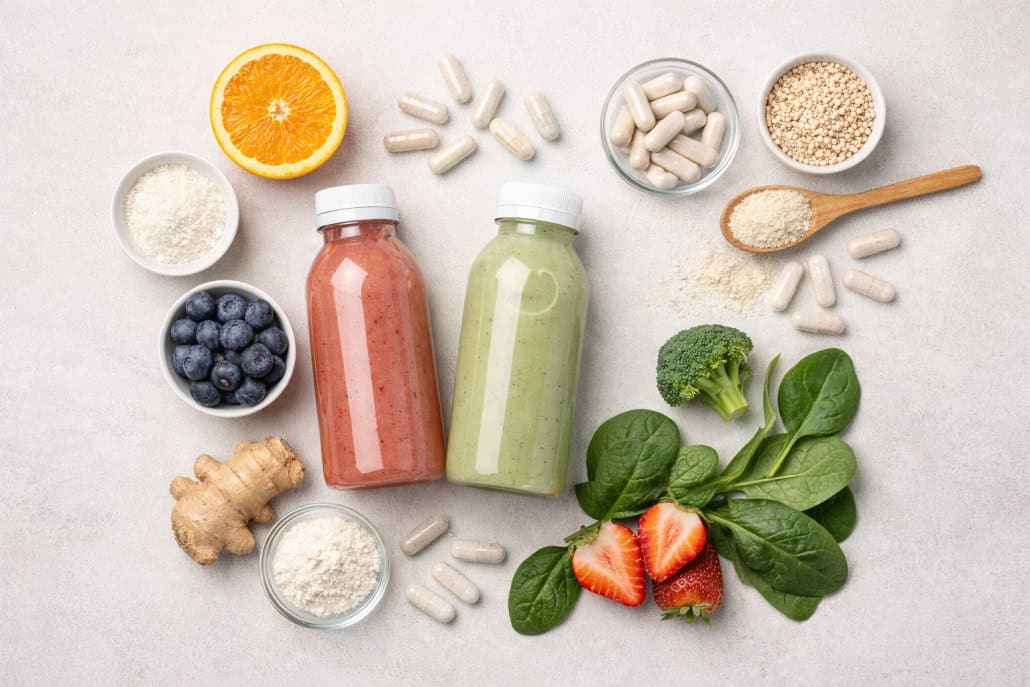
How Probiotic Drinks Support Better Nutrition with Plant-Based Ingredients
The functional beverage market has moved well past novelty. Probiotic drinks are now a formulation category that food and beverage manufacturers treat as a serious product development priority, and for good reason. Consumers are actively seeking beverages that do more than hydrate. But as the category scales, the ingredient decisions behind probiotic drinks are becoming more consequential, particularly around what those drinks contain beyond the live cultures themselves.
For formulators, the real question is not just whether to include probiotics. It is what surrounds them in the formulation, and whether that supporting nutrition story holds up.
Why Probiotic Drinks are Drawing Formulation Attention
The numbers make the commercial case plainly. The global probiotic drinks market was valued at approximately $24.85 billion in 2024 and is projected to reach $56.19 billion by 2034, growing at a CAGR of roughly 8.5%. Plant-based probiotic drinks represent one of the fastest-growing subcategories, with an estimated CAGR of 9.1%, driven by veganism, lactose intolerance, and rising consumer demand for clean-label alternatives.
That growth reflects a genuine shift in how brands and their customers think about what a beverage should deliver. The appeal of probiotic drinks rests on a convergence of gut health awareness, functional nutrition, and ingredient transparency. Manufacturers who understand all three of those dimensions are building products that earn repeat purchase. Those who focus narrowly on the probiotic strain alone are leaving formulation value on the table.
What Plant-Based Matrices Add to the Formulation
Probiotic strains do not exist in isolation. They interact with the broader ingredient environment they are placed in, and those interactions have direct consequences for nutrient delivery and product performance.
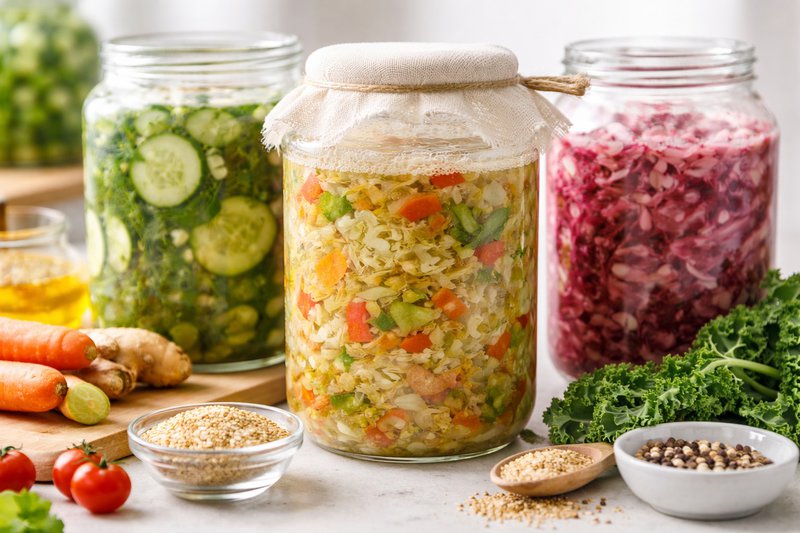
Research published in peer-reviewed literature confirms that combining probiotics with plant-based foods creates measurable synergistic effects. Specifically:
- Fermentation can degrade anti-nutritional compounds such as phytates in plant foods, which would otherwise inhibit mineral absorption. This means fermented legume- or vegetable-based beverages can deliver enhanced bioavailability of iron and zinc compared to non-fermented equivalents.
- Probiotic bacteria in fruit-based matrices have been shown to support the intestinal absorption of calcium, iron, and magnesium, while also supporting the supply of ascorbic acid.
- Short-chain fatty acids (SCFAs) produced when probiotics ferment plant-based fibers, including beta-glucans and cellulose from whole grains and vegetables, help reinforce the intestinal mucosa and may support inflammatory balance.
They depend heavily on strain selection, matrix compatibility, and formulation stability. But they represent a genuine performance advantage that brands can communicate, provided the ingredient foundation supports the claim. For manufacturers evaluating sourcing standards, NutriFusion's certifications and quality framework provides a useful reference for what a documented, clean-label ingredient system looks like in practice.
The Stability Problem That Often Gets Overlooked
One of the more underappreciated formulation challenges in probiotic beverage development is nutrient survival. Live cultures can decline during processing and shelf life. But the supporting micronutrients in a probiotic drink, vitamins, minerals, and phytonutrients, face similar degradation risks.
Conventional synthetic vitamin systems are commonly used for fortification in this category. They are inexpensive and widely available. But they carry limitations that matter to manufacturers building premium or clean-label products:
- Synthetic vitamins often appear as unfamiliar chemical names on the ingredient statement, complicating clean-label positioning.
- Synthetic forms have lower bioavailability compared to whole-food-derived equivalents, particularly for fat-soluble vitamins.
- In acidic or oxygen-rich beverage environments, which many probiotic drinks are, certain synthetic forms degrade more readily during storage.
Whole-food-derived alternatives, such as NutriFusion's 6 Nutrient Fruit & Vegetable Blend, are built to address exactly this gap, delivering vitamins from plant sources with ingredient statements that read as fruits and vegetables rather than chemical compounds.
For brands developing probiotic drinks with a credible nutrition story, this creates a genuine formulation gap between the marketing claim and what actually reaches the consumer.
Formulation Considerations for Plant-Based Probiotic Beverages
When approaching a plant-based probiotic drink, there are several practical dimensions formulators should evaluate before finalizing the nutrition system:

- Strain selection and matrix fit: Not all probiotic strains perform equally in plant-based liquid matrices. Lactobacillus species, which represent a significant portion of commercial probiotic applications, have different stability profiles in fruit versus vegetable versus water-based substrates. Validated viability data specific to the intended matrix matters more than strain reputation alone.
- Micronutrient co-fortification: Probiotic drinks positioned in the functional beverage space increasingly carry nutrient content claims. Selecting micronutrients that survive processing, remain stable in the pH range of the product, and can be declared cleanly on the ingredient statement is a formulation priority that affects both regulatory compliance and shelf appeal. Blends like NutriFusion's 12 Nutrient Fruit & Vegetable Blend are designed with this specifically in mind, delivering 12 vitamins at 50% Daily Value per 225 mg from whole-food sources.
- Sensory impact: Plant-derived nutrient systems vary considerably in their color, taste, and aroma contribution. For probiotic beverages in fruit or botanical bases, this can be an advantage, plant-based nutrient powders often carry complementary flavor notes rather than the metallic or off-note profile sometimes associated with synthetic vitamin systems.
- Label claim defensibility: Nutrient content claims on beverages require substantiation that accounts for processing and shelf life. Formulators need stability data specific to their product format, not just the raw ingredient specification.
How NutriFusion Fits Into Probiotic Drink Formulation
Probiotic drink development benefits from a nutrition system that can survive processing, declare cleanly, and deliver measurable nutrient levels at end of shelf life. That is precisely where NutriFusion's plant-based ingredient blends address a real formulation need.
NutriFusion's GrandFusion blends are derived from whole fruits, vegetables, and mushrooms, broccoli, spinach, sweet potato, orange, kale, maitake mushroom, and others, and are processed to stabilize nutrient content through manufacturing and storage. The company's GRAS-documented stability work includes examples of finished-product nutrient delivery in categories like cooked pasta, which demonstrates survivability through processing conditions more demanding than many beverage applications.
For probiotic drink formulators specifically, several NutriFusion capabilities are relevant:
- Clean ingredient declaration: NutriFusion blends list as fruits and vegetables on the ingredient statement, supporting a clean-label positioning that aligns with what consumers of probiotic beverages expect.
- Concentrated nutrient delivery: The 21 Vitamin & Mineral Blend (NF-82333) delivers 100% Daily Value for 21 vitamins and minerals in 491 mg—a level of concentration that makes co-fortification practical without significantly altering the sensory profile of a beverage.
- Bioavailable, bioabsorbable nutrient forms: Because the nutrients are derived from whole-food sources rather than synthetic precursors, they are positioned to deliver better absorption compatibility in the gut environment that probiotic strains are simultaneously supporting.
- Formulation flexibility: NutriFusion offers blend customization and works with manufacturers across categories, including beverage applications, with minimum order quantities starting at one pound—making early-stage formulation work accessible.
For brands building probiotic drinks that want to carry a genuine whole-food nutrition story alongside their live culture claim, NutriFusion provides an ingredient system that can substantiate both sides of that positioning.
Manufacturers ready to explore plant-based nutrient systems for probiotic drink applications can start here: https://nutrifusion.com/
References
- Market Research Future. 2025. "Probiotic Drinks Market Size, Growth." Market Research Future. https://www.marketresearchfuture.com/reports/probiotic-drinks-market-5001
- Virtue Market Research. 2024. "Probiotic Drinks Market." Virtue Market Research. https://virtuemarketresearch.com/report/probiotic-drinks-market
- Towards FnB. 2025. "Probiotic Drinks Market Size to Climb USD 56.19 Billion by 2034." Towards FnB. https://www.towardsfnb.com/insights/probiotic-drinks-market
- National Center for Biotechnology Information (PMC). 2024. "Plant-based probiotic foods: current state and future trends." PMC. https://pmc.ncbi.nlm.nih.gov/articles/PMC11525375/
- National Center for Biotechnology Information (PMC). 2022. "Functional Foods, Nutraceuticals and Probiotics: A Focus on Human Health." PMC. https://pmc.ncbi.nlm.nih.gov/articles/PMC9143759/
- Food Research Lab. 2025. "Bioavailability Outcomes: FMCG Functional Beverages." Food Research Lab. https://www.foodresearchlab.com/latest-research/bioavailability-outcomes-fmcg-functional-beverages/
- U.S. Food and Drug Administration. 2018. "GRAS Notice GRN 769: Fruit/vegetable-derived vitamin C extract." FDA. https://www.fda.gov/media/127844/download
- NutriFusion. 2024. "21 Vitamin & Mineral Blend | NF-82333." NutriFusion. https://nutrifusion.com/21-vitamin-mineral-blend/