
Why Vitamin C Powder from Whole Food Sources is Easier for the Body
Most food and beverage manufacturers know that vitamin C is one of the most commonly fortified nutrients in the market. What is less discussed is how the source of that vitamin C affects how the body actually processes it. For formulators looking to build credible nutrition stories, the difference between whole food-derived vitamin C powder and its synthetic counterpart is worth understanding in detail.
What Makes Whole Food-Derived Vitamin C Different
Synthetic ascorbic acid is the dominant form of vitamin C used in food fortification. It is chemically identical to the ascorbic acid found in fruits and vegetables, but it does not arrive in the body with the same supporting cast.
Whole food sources of vitamin C naturally contain a matrix of cofactors: bioflavonoids, rutin, copper, and enzyme substrates that work alongside the vitamin in the body. These compounds are largely absent in isolated ascorbic acid. This distinction matters because nutrient absorption is not just a matter of delivering a molecule. It is about whether the body can efficiently take it up and use it.
This is where bioavailability becomes a practical formulation issue, not just a marketing claim. Vitamin C derived from whole food concentrates can be bioabsorbable and bioavailable in ways that synthetic isolates are not designed to replicate.
Why Bioavailability Matters in Formulation
Formulators work hard to hit label claim targets, but hitting the number on a panel and delivering meaningful nutrition to the end consumer are two different things. A product can declare 100% Daily Value of vitamin C and still underdeliver if the ingredient form is poorly absorbed.
Key bioavailability considerations for vitamin C in formulation include:
- Absorption rate: Whole food matrices can support a more gradual absorption curve, which may reduce the saturation effect seen at high synthetic doses
- Stability under processing: Vitamin C is notoriously sensitive to heat, pH, and oxidation; whole food-derived concentrates can be specifically stabilized for use across manufacturing conditions
- Co-nutrient interaction: The presence of flavonoids and other phytonutrients in whole food sources may support better tissue uptake compared to isolated ascorbic acid
For manufacturers building better-for-you products, these are not minor differences. They directly affect whether the nutrition claim on the package reflects the nutrition experience of the consumer.
The Label Claim Advantage for Clean-Label Brands
Beyond absorption, there is a formulation strategy argument for using whole food-derived vitamin C powder. Synthetic ascorbic acid must be declared on the ingredient label as "ascorbic acid" or "vitamin C (ascorbic acid)." A whole food-derived source, by contrast, can be declared as the fruits and vegetables it actually came from.
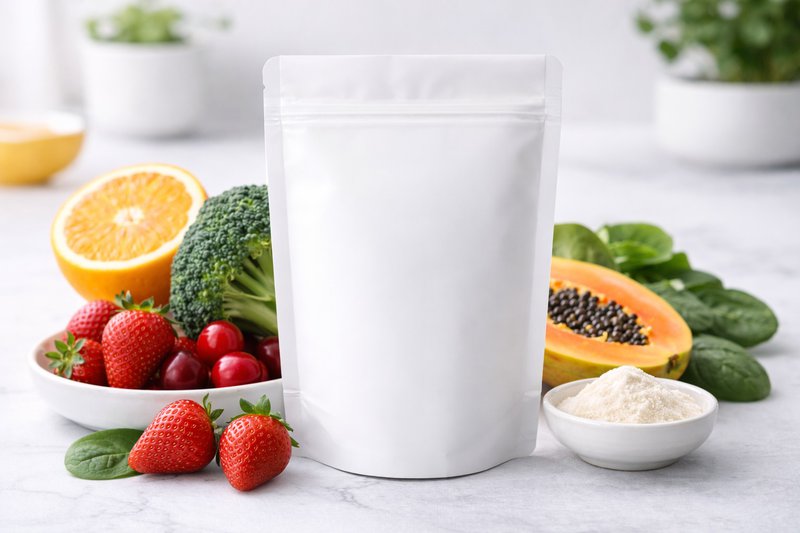
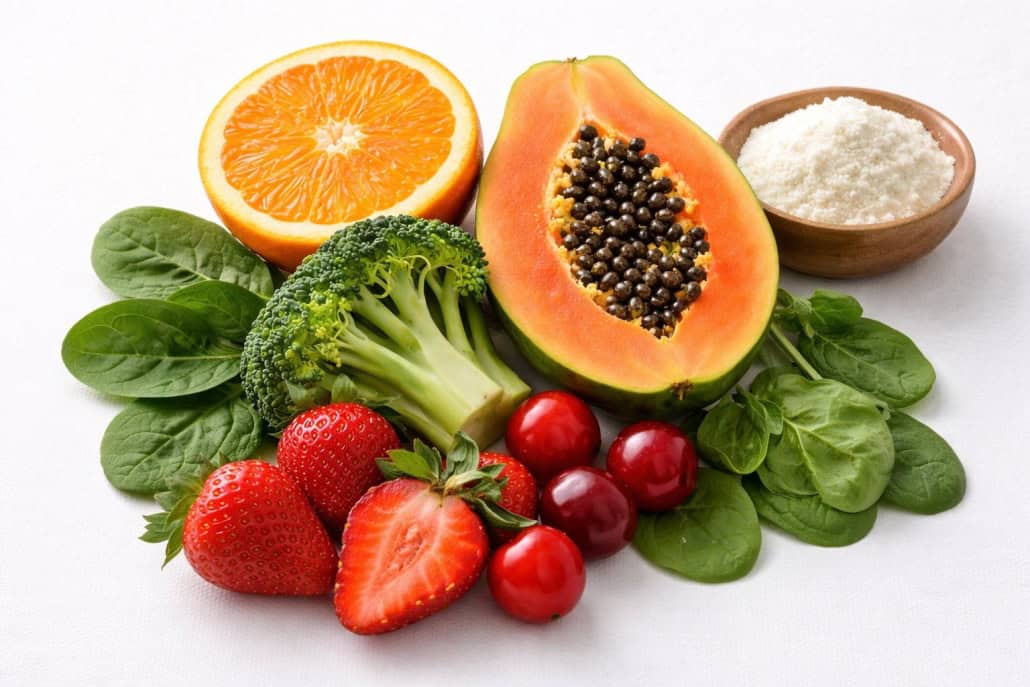
For brands building clean-label products in competitive categories like functional beverages, kids' nutrition, or nutraceuticals, that distinction is commercially meaningful. Consumers and retail buyers increasingly read ingredient lists. A label that reads "broccoli, spinach, orange, papaya" communicates something that "ascorbic acid" simply does not.
It is worth noting that the average consumer cannot tell the difference between plant-based nutrition and synthetic nutrition just by looking at a product. The label is often the only signal. That makes sourcing decisions a brand equity issue, not just a formulation one.
Stability: The Formulation Challenge Whole Food Sources Can Meet
One of the most common objections to using whole food-derived nutrients is stability. If the vitamin comes from produce, can it survive the heat of extrusion, pasteurization, or extended shelf life?
The answer, when the ingredient is properly concentrated and processed, is yes. FDA GRAS documentation for fruit and vegetable-derived vitamin C extracts includes stability data showing that vitamin C levels in finished products, including cooked pasta, aligned with declared label values after processing and shelf storage. That kind of documented stability is what QA and regulatory teams need to scale with confidence.
NutriFusion's GrandFusion blends are specifically engineered for processing stability, which means formulators are not trading shelf performance for a cleaner label story.
What This Means for Manufacturers Making Sourcing Decisions
The conversation around vitamin C in formulation is shifting. As more brands pursue clean-label strategies and as AI-driven search engines increasingly surface ingredient transparency as a ranking signal, sourcing decisions that once felt like internal choices are becoming visible to buyers and consumers.
Whole food-derived vitamin C powder gives manufacturers a way to deliver a nutrient that the body can recognize and use, while also building an ingredient story that holds up to scrutiny on the label, in retail, and in digital search. The performance case and the brand case are pointing in the same direction.
For formulators ready to explore what whole food vitamin C can do in their specific application, the starting point is understanding which blend fits the product format, the processing conditions, and the label goals.
How NutriFusion Addresses This Directly
NutriFusion's vitamin C powder is derived from concentrated whole food sources including orange, papaya, and other fruits and vegetables. The ingredients are processed to concentrate and stabilize the nutrients without synthetic additives, excipients, or preservatives.
Several points make this practically relevant for manufacturers and formulators:
- NutriFusion can deliver 100% Daily Value for 21 vitamins and minerals in just 491 mg of powder, a level of concentration that makes whole food fortification operationally feasible at scale
- Blends are available with minimum orders starting at 1 pound, which makes pilot formulation and early-stage product development accessible for emerging brands alongside larger operations
- The ingredient statement reads as fruits and vegetables, supporting clean-label declarations without sacrificing nutrient density
For brands in beverage, nutraceutical, pet, or functional food categories, NutriFusion's approach means vitamin C fortification no longer requires a choice between label quality and nutritional performance. The B Complex and multi-nutrient blends also allow formulators to address multiple nutrient targets within a single ingredient addition, reducing SKU complexity and procurement overhead.
Build better products with ingredients that perform beyond the label. Explore how NutriFusion can support your next formulation at scale: https://nutrifusion.com/
References
- U.S. Food and Drug Administration. 2018. "GRAS Notice GRN 769: Fruit/Vegetable-Derived Vitamin C Extract." FDA. https://www.fda.gov/media/127844/download
- U.S. Food and Drug Administration. 2017. "GRAS Notice GRN 690: Fruit and Vegetable Vitamin Extract." FDA. https://www.fda.gov/files/food/published/GRAS-Notice-GRN-690-Fruit-and-vegetable-vitamin-extract.pdf
- FoodNavigator-USA. 2024. "NutriFusion's Flexible Minimum Orders Resonate With Emerging Brands." FoodNavigator. https://www.foodnavigator-usa.com/Article/2024/08/28/nutrifusion-s-flexible-minimum-orders-resonate-with-emerging-brands