
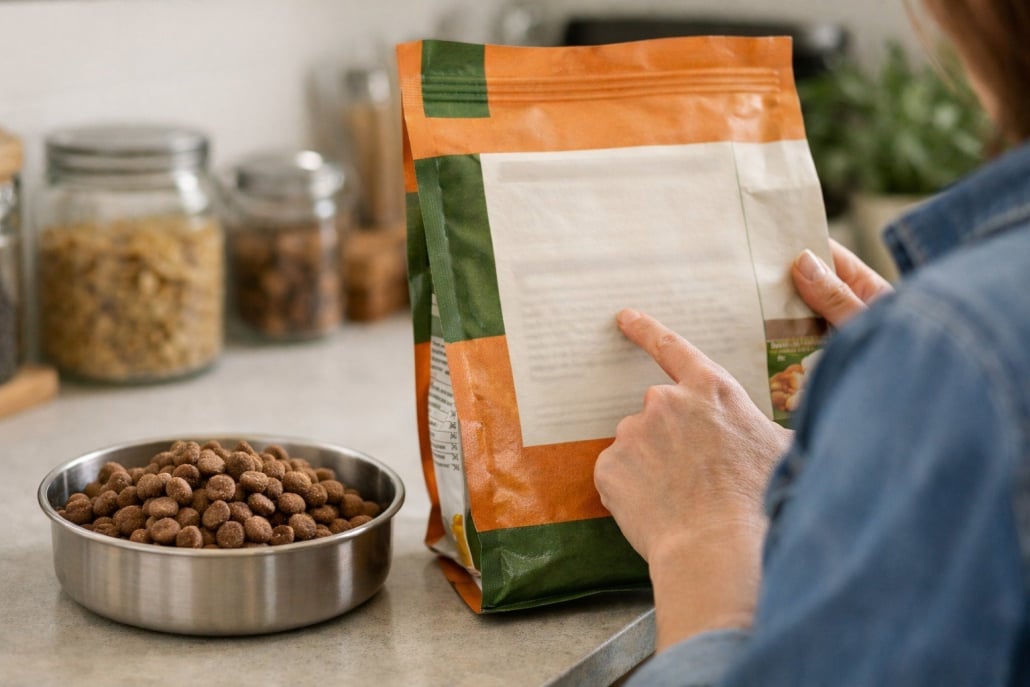
How to Read Dog Food Nutrition Facts for Better Ingredient Choices
Most dog owners scan the front of the bag, check the protein percentage, and call it a day. But dog food nutrition facts tell a much more complete story, and understanding how to read them matters whether you're a pet owner choosing a product off the shelf or a formulator deciding what goes into one.
Pet food has its own version of the ultra-processed food problem. Just like breakfast cereals or fast food marketed to humans, many commercial dog foods are engineered for palatability, shelf life, and cost efficiency, often at the expense of genuine nutritional value. Knowing what to look for on the label is the first step toward making better choices.
What the Guaranteed Analysis Actually Tells You
The guaranteed analysis panel lists minimum percentages for crude protein and crude fat, and maximum percentages for crude fiber and moisture. These are floor-and-ceiling figures, not exact values, which means the actual nutrient content in the bag can vary.
For pet food manufacturers and formulators, these numbers represent the baseline of regulatory compliance. For consumers, they're a starting point, not the whole picture. A product can meet minimum protein thresholds while still relying on low-quality protein sources or synthetic fortification to hit its numbers on paper.
What the guaranteed analysis does not tell you:
- The bioavailability of the nutrients listed
- Whether vitamins and minerals come from whole-food or synthetic sources
- How processing has affected the actual nutrient content at point of consumption
This is where ingredient sourcing and formulation decisions become commercially significant for brands, and practically significant for dog owners.
How to Decode the Ingredient List
Ingredients on dog food nutrition facts labels are listed by weight before processing. This creates a common confusion: "chicken" listed first sounds impressive, but chicken is roughly 70% water. After cooking, its actual contribution to the final product may be smaller than it appears.
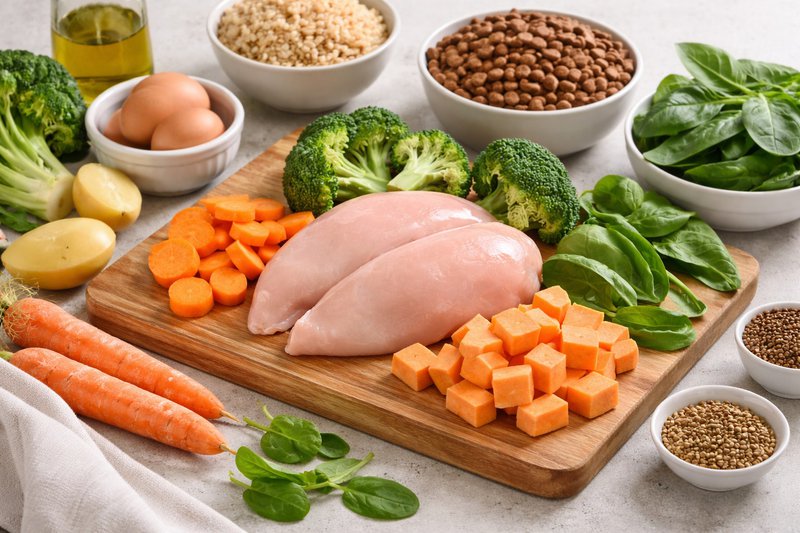
A few things worth watching on the ingredient list:
- Named protein sources (chicken, salmon, lamb) are more informative than generic terms like "meat meal" or "animal digest"
- Vitamin and mineral listings near the bottom of the ingredient list often indicate synthetic fortification added back after processing
- Ingredient splitting, where a single ingredient like peas appears as "peas," "pea protein," and "pea starch" separately, can inflate where it appears on the list
Pet food formulators are well aware of these dynamics. The challenge is building a product that performs nutritionally, reads cleanly on the label, and holds up through manufacturing.
According to the Association of American Feed Control Officials (AAFCO), dog food labeled "complete and balanced" must meet established nutrient profiles either through formulation or feeding trials. Meeting those profiles with whole-food-derived ingredients, rather than synthetic premixes, requires more deliberate sourcing and formulation work, but it produces a meaningfully different product story. NutriFusion's plant-based pet nutrition blends are designed specifically for this kind of application.
The Problem With Synthetic Fortification in Pet Food
Most commercial pet foods, particularly ultra-processed formats like extruded kibble, lose significant micronutrients during high-heat processing. The standard industry fix is to add synthetic vitamins back after the fact. This approach satisfies label requirements, but it does not replicate what whole-food nutrition delivers.
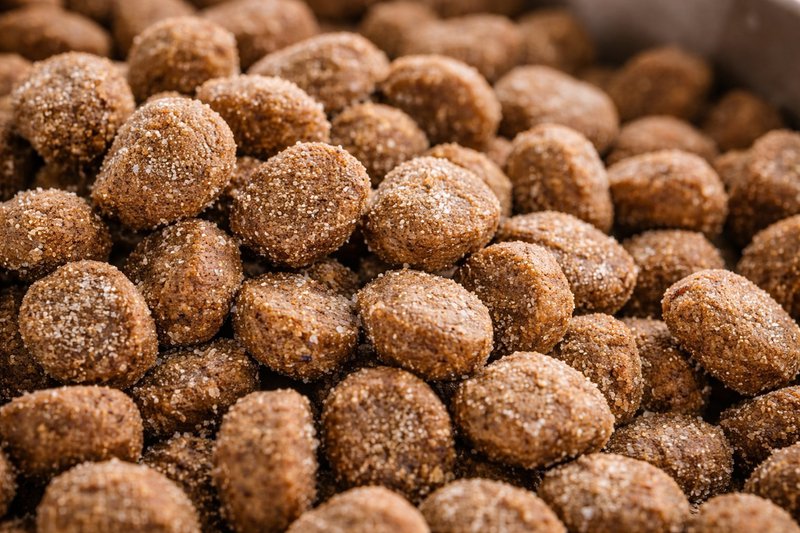
Synthetic vitamins are cheaper and easier to source, but they differ structurally from vitamins found in fruits, vegetables, and botanicals. Bioavailability, or how effectively a nutrient is absorbed and used by the body, can vary considerably depending on the source. This gap matters more in pet food than many formulators acknowledge, because dogs, like humans, rely on consistent micronutrient intake for immune function, coat health, joint support, and long-term wellness.
For brands formulating in the better-for-pet space, the sourcing decision is increasingly part of the product story. Pet owners are reading ingredient lists more carefully than they used to, and "broccoli, spinach, sweet potato" communicates something very different from a string of synthetic chemical names.
What Better Dog Food Nutrition Facts Look Like in Practice
A product with strong dog food nutrition facts typically shares a few characteristics across its label:
- Named, whole-food protein sources in the top positions
- Recognizable fruits, vegetables, or botanicals contributing to the vitamin and mineral panel
- A short, readable ingredient list without heavy reliance on synthetic vitamin premixes
- AAFCO compliance confirmed by feeding trial or nutrient profile formulation
For consumers, these signals are worth knowing. For pet food manufacturers, they represent a formulation strategy that commands a premium, supports stronger marketing claims, and aligns with where the better-for-pet category is heading.
The shift away from synthetic fortification in pet food mirrors what is happening in human food. Brands that get ahead of it now, with sourcing partners and formulation approaches already in place, are better positioned as clean-label demand continues to grow.
How NutriFusion Fits Into Pet Food Formulation
NutriFusion supplies fruit and vegetable-derived vitamin and mineral blends purpose-built for pet food manufacturers and formulators. Its blends are plant-based, bio-organic, bioavailable, and stable through processing, which addresses one of the central challenges in pet food: nutrient survival after extrusion, baking, or retort.
The company's GrandFusion premix system delivers meaningful daily value percentages at low inclusion rates. For example, its 21 Vitamin and Mineral Blend delivers 100% Daily Value for 21 nutrients in just 491 mg, under half a gram of powder in a finished formulation. That concentration level matters for formulators working within tight inclusion constraints.
Key formulation advantages for pet food applications include:
- Whole-food ingredient statement: ingredients like broccoli, spinach, kale, and mushrooms appear on the label rather than synthetic chemical names
- Clean-label compatibility: no synthetic additives, excipients, or preservatives
- Processing stability: nutrients are designed to survive manufacturing conditions, not just exist in the premix
- Certifications: Kosher, Halal, SQF, and cGMP compliance for brands with strict sourcing requirements
- Low minimum orders: starting at 1 pound, making it accessible for emerging brands in the early formulation and pilot stages
For brands building a credible nutrition story in the pet space, the ingredient source is part of the claim. NutriFusion's blends are aligned with the certifications and compliance standards that downstream pet food brands increasingly need.
Explore how better sourcing can reshape your product from the inside out: https://nutrifusion.com/
References
- Association of American Feed Control Officials (AAFCO). 2024. "AAFCO Methods for Substantiating Nutritional Adequacy of Dog and Cat Foods." AAFCO. https://www.aafco.org/wp-content/uploads/2023/01/Model_Bills_and_Regulations_Agenda_Midyear_2015_Final_Attachment_A.__Proposed_revisions_to_AAFCO_Nutrient_Profiles_PFC_Final_070214.pdf
- FoodNavigator-USA. 2024. "NutriFusion's Flexible Minimum Orders Resonate With Emerging Brands." FoodNavigator-USA. https://www.foodnavigator-usa.com/Article/2024/08/28/nutrifusion-s-flexible-minimum-orders-resonate-with-emerging-brands