
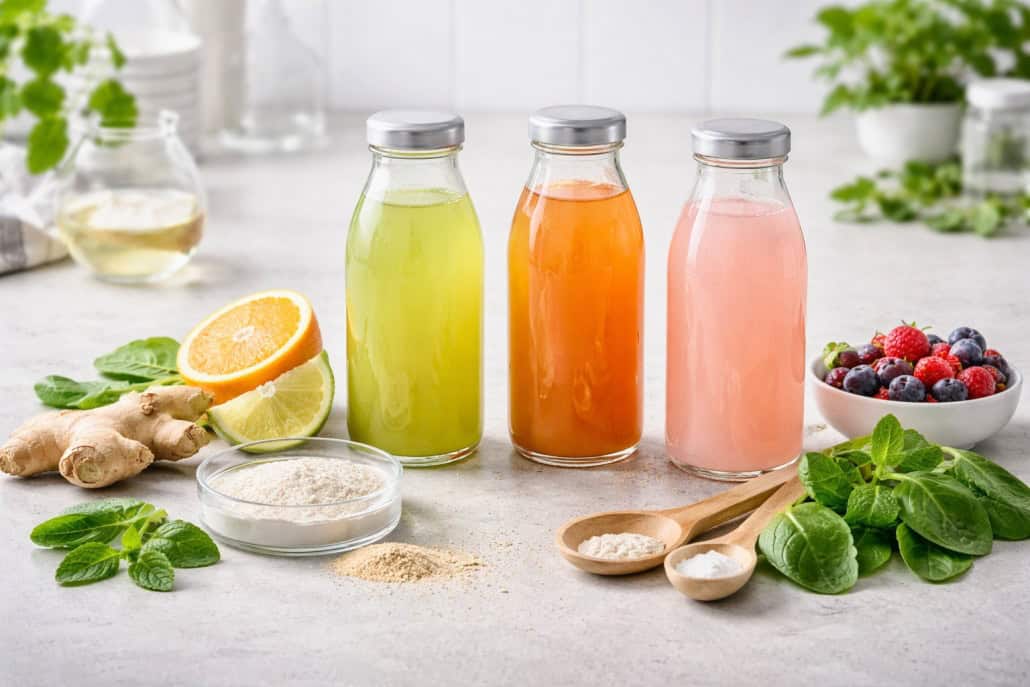
How Gut Health Drinks Are Designed to Support Digestion and Balance
The beverage aisle has changed significantly over the past decade. What used to be rows of soda and juice now shares space with kombucha, kefir, prebiotic sodas, and fiber-fortified waters. This shift reflects something broader: consumers and the brands serving them are taking digestive health seriously as a formulation priority, not just a wellness trend.
The global digestive health drinks market was valued at USD 27.6 billion in 2023 and is projected to reach USD 47.4 billion by 2032, growing at a CAGR of 6.2%. For beverage formulators and brand developers, that trajectory represents real product opportunity. But it also raises a more practical question: what actually makes a gut health drink effective, and what should go into building one that holds up on the label and in the body?
What Goes Into a Gut Health Drink
Gut health drinks are generally built around one or more of three functional categories: probiotics, prebiotics, and digestive enzymes. Each plays a different role in supporting the digestive system, and understanding the distinction matters for both product design and consumer communication.
- Probiotics are live microorganisms that, when consumed in adequate amounts, can help maintain a balanced gut microbiome. Common strains used in beverages include Lactobacillus and Bifidobacterium species. Kombucha and kefir are classic examples of probiotic-forward drinks.
- Prebiotics are non-digestible fibers that feed beneficial bacteria already living in the gut. Inulin, chicory root, and certain fruit-derived fibers are frequently used in this category.
- Digestive enzymes support the breakdown of macronutrients and are often added to drinks targeting bloating, discomfort, or heavy-meal digestion.
Many newer products combine more than one of these to create what are called synbiotic formulations, where the prebiotic feeds the probiotic for compounded effect.
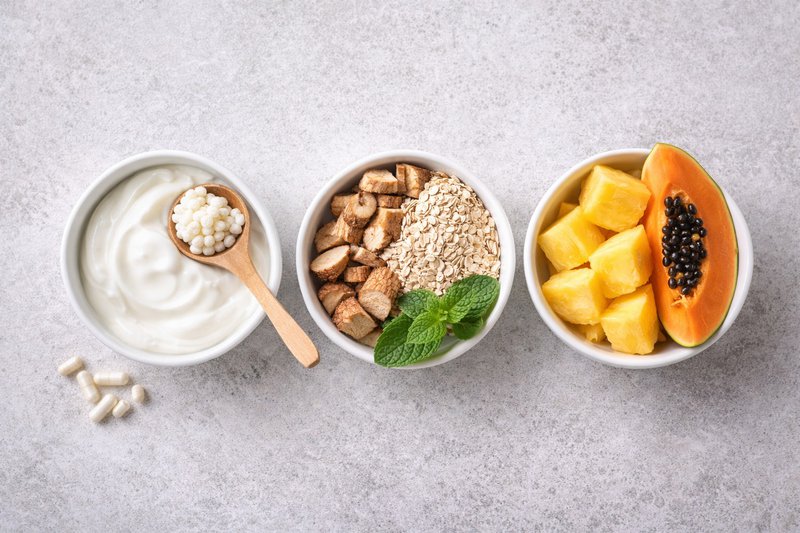
Beyond the functional actives, there is the question of micronutrient support. Vitamins and minerals play a well-documented role in gut lining integrity, immune function in the digestive tract, and inflammatory response. Formulating a gut health drink with whole-food-derived micronutrients alongside probiotics or prebiotics can strengthen both the product story and the actual nutritional contribution.
Why Clean-Label Matters in This Category
Approximately 46% of global consumers seek beverages that aid in gut function, and roughly 33% of recent product launches in this space have emphasized clean-label positioning. That consumer preference carries real weight in formulation decisions.
Shoppers buying gut health drinks are often already engaged in reading labels. They want to recognize what is in the product. When a beverage contains synthetic vitamins, they show up on ingredient panels with names like "ascorbic acid" or "pyridoxine hydrochloride," which do not communicate much to a health-conscious buyer. Whole-food-derived nutrients, by contrast, can list ingredients like broccoli, spinach, or orange, which read as familiar and trustworthy.
For formulators, clean labeling is not just an aesthetic choice. It affects how claims are positioned, how the product is received by retail buyers, and increasingly, how it performs in search and comparison tools that consumers and health practitioners rely on. Beverage manufacturers and formulators working in the gut health space have a clear advantage when ingredients support both function and label credibility.
Stability and Bioavailability: The Formulation Challenge
One of the more underappreciated challenges in gut health drink development is ingredient stability. Probiotics are sensitive to heat, moisture, and pH. Certain vitamins degrade during processing or on the shelf. Formulators need to account for this throughout the entire development and manufacturing process.
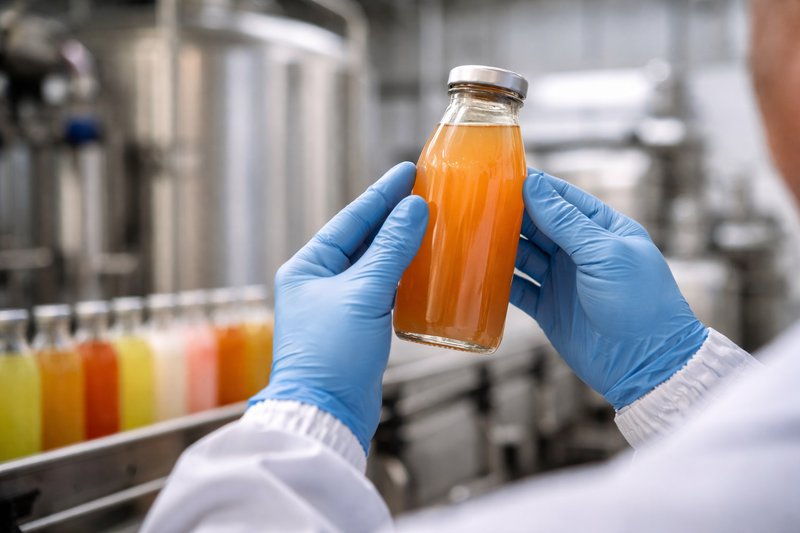
Key watchouts include:
- Thermal processing: pasteurization can destroy live cultures; UHT treatment is even more aggressive
- pH sensitivity: acidic environments in kombucha or citrus-based drinks can affect probiotic viability and certain B vitamins
- Shelf life: some vitamins, particularly C and certain B vitamins, degrade over time in aqueous environments
- Sensory impact: high doses of certain nutrients can produce off-flavors or color changes that affect the finished product
Choosing ingredients that are both bioavailable and stable through processing is not optional. It determines whether a nutrient claimed on the label is actually present and functional at the point of consumption. Stability documentation matters here, and working with ingredient suppliers who can provide it is part of responsible formulation.
What the Growth of Gut Health Drinks Means for Formulators and Brands
The global gut health-focused drinks market is projected to grow at a 7.3% CAGR from 2025 through 2034, and the competitive differentiation in this space is increasingly moving toward ingredient quality, not just category inclusion. Being in the gut health drinks segment is no longer enough. The brands that will hold shelf space over time are the ones that can support their claims with substantiated, recognizable ingredients and a formulation story that survives scrutiny.
For manufacturers, that means thinking beyond probiotics alone. Layering in plant-based micronutrient support alongside functional actives creates a more complete product, a stronger nutrition panel, and a more compelling reason to buy. For consumers who are already reading labels and looking for drinks that do more than promise wellness, whole-food-derived nutrients provide the credibility that synthetic fortification cannot.
The B Complex Vitamin Blend (NF-2131) is one example of how targeted nutrient support can be added to a beverage without compromising sensory quality or label appeal. The eight essential B vitamins it delivers are sourced from broccoli, carrot, spinach, sunflower seed, and chlorella. That is a very different ingredient story than a synthetic B-complex listed in chemical notation.
How NutriFusion Supports Gut Health Beverage Development
NutriFusion's GrandFusion blends are built specifically to address the stability and clean-label challenges that come with functional beverage formulation. The company's whole-food-derived micronutrient powders are sourced from fruits, vegetables, and mushrooms, then stabilized through a proprietary process that preserves nutrient integrity through manufacturing.
This matters in gut health drink development for a few specific reasons:
- Ingredient panel legibility: NutriFusion's blends list actual food sources, not synthetic chemical names
- Processing stability: blends are formulated to survive heat, moisture, and pH variation common in beverage production
- Low inclusion rates: delivering meaningful daily values in small powder additions minimizes sensory disruption in the finished drink
- Formulation flexibility: blends can be customized to match specific nutrient targets, making it easier to align with product claims
The 21 Vitamin and Mineral Blend (NF-82333) delivers 100% Daily Value for 21 nutrients in just 491 mg, sourced from ingredients like broccoli, kale, spinach, sweet potato, and maitake mushrooms. For a beverage formulator adding a micronutrient component to a probiotic or prebiotic drink, this kind of density means less powder, less sensory interference, and a cleaner label.
NutriFusion also holds Kosher, Halal, SQF, and cGMP certifications, which matter for brands selling into specialty retail or pursuing broad distribution. Minimum orders starting at one pound give emerging brands the ability to run trials and test formulations without large inventory commitments.
If you are developing or reformulating a gut health drink and want an ingredient partner with a documented clean-label approach, explore NutriFusion's full blend portfolio at: https://nutrifusion.com/
References
- Market Research Future. 2024. "Digestive Health Drinks Market Size, Trends, Report 2032." Market Research Future. https://www.marketresearchfuture.com/reports/digestive-health-drinks-market-11535
- Global Growth Insights. 2024. "Gut Digestive Health Drinks Market Size and Forecast 2025-2033." Global Growth Insights. https://www.globalgrowthinsights.com/market-reports/gut-digestive-health-drinks-market-115976
- Insight Ace Analytic. 2025. "Gut Health Focused Drinks Market Research Report 2025." Insight Ace Analytic. https://www.insightaceanalytic.com/report/gut-health-focused-drinks-market/3055
- FDA. 2018. "GRAS Notice GRN 769: Fruit and Vegetable-Derived Vitamin C Extract." U.S. Food and Drug Administration. https://www.fda.gov/media/127844/download