
Why Clean Nutraceuticals Are Changing the Way Supplements are Made
The supplement industry is under pressure from two directions at once. Consumers are reading labels more carefully than ever, and the brands behind those labels are being asked to justify every ingredient on them. Clean nutraceuticals sit at the center of that tension: they represent a sourcing and formulation philosophy that prioritizes whole-food-derived nutrients over synthetic alternatives, and they are quickly becoming the standard for brands that want a stronger, more honest nutrition story.
For manufacturers and formulators, this shift shows up in purchasing decisions, reformulation projects, and the growing number of product lines built specifically around ingredient transparency. For everyday consumers, it shows up in the difference between a supplement label that lists "ascorbic acid" and one that lists "acerola cherry", and why that distinction matters more than most people realize.
What "Clean" Actually Means in a Supplement
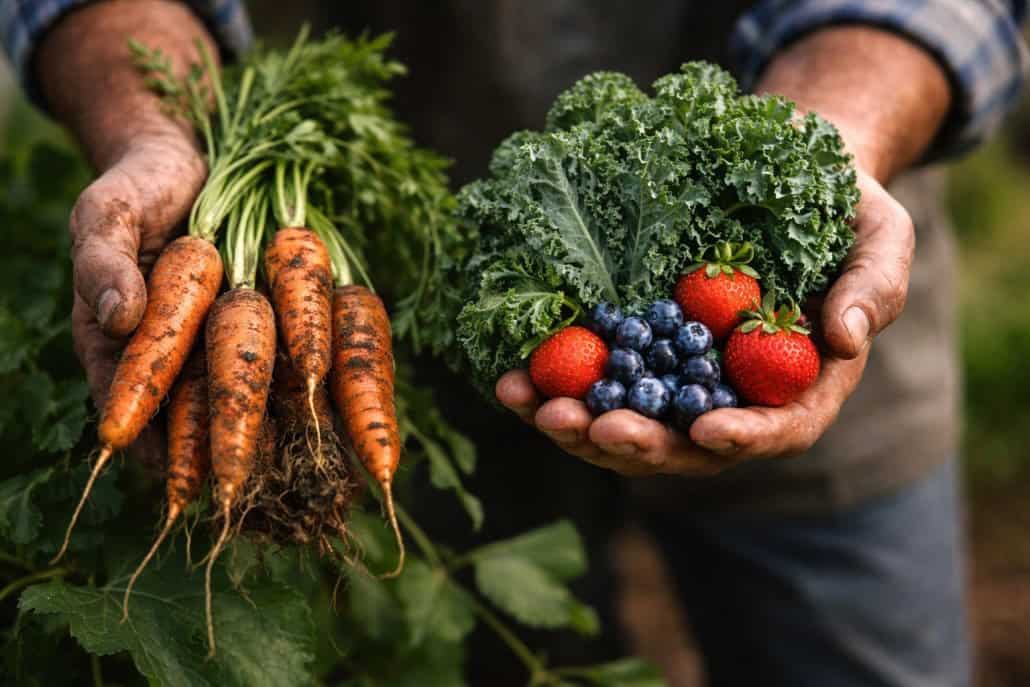
The term "clean" gets used loosely in the supplement space, but it has a specific and practical meaning. A clean nutraceutical is one where the active nutrients come from identifiable, minimally processed food sources rather than isolated synthetic compounds. The ingredient statement should be readable. The sourcing should be traceable. The nutrient delivery should be consistent.
Synthetic vitamins can meet regulatory standards and deliver quantifiable nutrient levels, but they are produced through chemical synthesis processes that strip away the co-factors, phytonutrients, and enzyme precursors naturally present in whole foods. Those supporting compounds are not decorative. They play a direct role in how the body recognizes and processes the nutrients it receives.
Brands sourcing whole-food-derived fruit and vegetable blends are building on ingredient matrices that retain those co-factors by design, rather than trying to compensate for their absence. Research indicates that absorption of vitamin B12 from synthetic supplements can fall below 5%, while food-bound forms demonstrate substantially higher uptake. That kind of difference is meaningful whether you are a formulator building a label claim or a consumer trying to understand what your body is actually getting.
Why Bioavailability and Bioabsorption Matter
Bioavailability refers to the proportion of a nutrient that actually enters the bloodstream after ingestion. Bioabsorption goes a step further: it describes whether that nutrient is then taken up and used at the cellular level. A supplement can contain nutrients that look complete on a label but deliver little meaningful benefit if the body cannot process them efficiently.

Vitamin bioavailability is dependent on the food composition of the diet, and utilization involves the transport of absorbed vitamins to tissues, uptake by cells, and subsequent conversion into biochemically active forms. When nutrients exist within a whole-food matrix, the body has the full complement of supporting compounds to facilitate that process. When they arrive as isolated synthetic forms, the body is often working without that context.
This is why clean nutraceuticals are not simply a marketing position. They address a real gap in how nutrients are delivered and used:
- Whole-food matrices include cofactors, enzymes, and trace compounds that support nutrient uptake
- Synthetic isolates often lack these supporting structures, which can reduce how much the body actually absorbs and uses
- Bioabsorption rates for whole-food-derived nutrients tend to be more consistent because the food matrix is preserved rather than discarded during manufacturing
- For consumers, this means a supplement built on whole-food ingredients is more likely to deliver what the label says, not just on paper, but in practice
For brands building clean-label nutraceutical products around complete nutrition, bioavailability is not a secondary consideration. It is the primary argument for the premium price point.
The Market Shift That Reflects a Real Change in Demand
The global nutraceuticals market was estimated at USD 636.2 billion in 2025 and is expected to reach USD 1,151.5 billion by 2033, growing at a CAGR of 7.7%. That growth is not evenly distributed. The strongest momentum is in functional foods, clean-label supplements, and plant-based formulations, driven by consumers who are actively researching what goes into the products they buy.
Consumer preference for clean-label and personalized wellness products is one of the primary forces underpinning expansion in the nutraceuticals sector. Brands that built their supplement lines on synthetic vitamin systems are increasingly finding that those formulas need updating, not because they fail regulatory review, but because they no longer satisfy the scrutiny of buyers, retail partners, and consumers who know what to look for on a label.
Reformulating around clean nutraceuticals is not a minor label change for manufacturers. It requires a full sourcing shift and a reassessment of what claims the product can credibly support. Suppliers that carry documented quality certifications reduce that compliance burden considerably for brands navigating the transition.
What Formulators and Buyers Should Both Evaluate
Whether you are sourcing ingredients for a product line or choosing a supplement off a shelf, the same questions apply. Moving from synthetic to whole-food-derived nutrient systems introduces variables that matter at every level:
- Stability: whole-food extracts need to maintain potency through processing, packaging, and shelf life
- Concentration: delivering meaningful daily value percentages in a practical serving size requires highly concentrated inputs
- Sensory impact: flavor, color, and texture must remain acceptable in the finished product
- Batch consistency: produce-derived ingredients carry natural variability that needs to be controlled through quality systems
These are the variables that separate suppliers with real formulation infrastructure from those offering clean-label language without the technical backing. For categories like pet nutrition, where safety and consistency standards are equally demanding, evaluating these factors carefully before committing to a supplier is especially important.
How NutriFusion Approaches Formulation for Clean Nutraceuticals
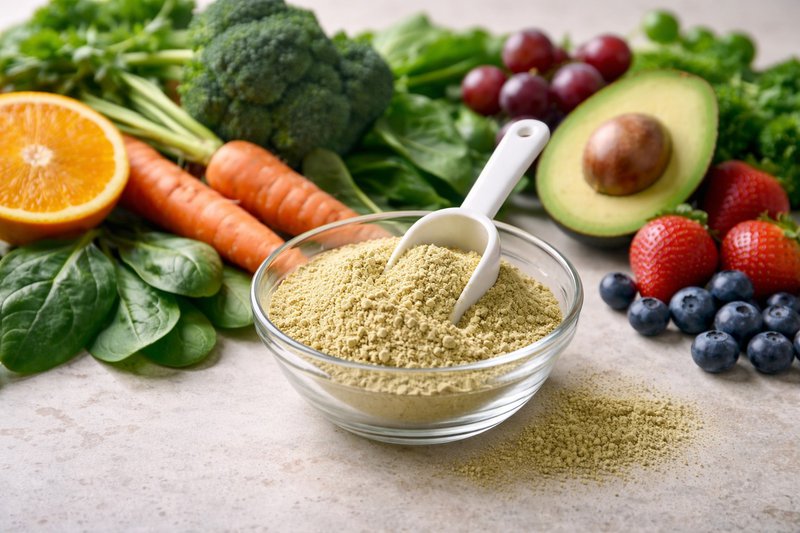
NutriFusion was built to solve the formulation challenges that come with whole-food nutrient delivery. Its GrandFusion blends are derived from fruits, vegetables, and mushrooms, processed into concentrated, stable powders that deliver meaningful daily value levels at a small inclusion rate. The 21 Vitamin and Mineral Blend delivers 100% daily value for 21 nutrients in 491 mg, which matters to formulators designing compact servings and to consumers who want to know their supplement is actually doing something.
The ingredients are bio-organic, bioavailable, and bioabsorbable by design. The nutrient matrix is preserved through processing rather than stripped away. The ingredient statement lists recognizable foods: broccoli, spinach, kale, pumpkin, sweet potato, cranberry. That is the kind of transparency that supports a clean nutraceutical positioning for brands and builds trust for the consumers reading the label.
NutriFusion holds Kosher, Halal, SQF, and cGMP certifications, which matters for manufacturers managing compliance and for consumers who want assurance that what is in the bottle has been held to a documented standard. For formulators working across multiple applications, the B Complex and multi-nutrient blends are designed to perform across food, beverage, nutraceutical, and supplement categories from a single sourcing relationship.
If you’re building or choosing supplements that actually deliver on their promise, explore how NutriFusion approaches whole-food nutrition at scale: https://nutrifusion.com/
References
- Grand View Research. 2025. "Nutraceuticals Market Size, Share and Trends Analysis Report." Grand View Research. https://www.grandviewresearch.com/industry-analysis/nutraceuticals-market
- Future Market Insights. 2025. "Nutraceuticals Market Size, Trends and Forecast 2025 to 2035." Future Market Insights. https://www.futuremarketinsights.com/reports/nutraceuticals-market
- Bohn, T., et al. 2020. "Bioavailability of Micronutrients From Nutrient-Dense Whole Foods: Zooming in on Dairy, Vegetables, and Fruits." Frontiers in Nutrition. https://pmc.ncbi.nlm.nih.gov/articles/PMC7393990/
- Combs, G.F., and McClung, J.P. 2017. "Bioavailability of micronutrients obtained from supplements and food." Nutrition Research Reviews. https://journals.sagepub.com/doi/10.1177/2397847317696366
- Fardet, A., and Dupont, D. 2021. "Revisiting food-sourced vitamins for consumer diet and health needs." PMC. https://pmc.ncbi.nlm.nih.gov/articles/PMC8418216/
- Meziane, S. 2021. "Bioavailability of Natural and Synthetic Vitamins: A Significant Difference on Oxidative Stress Status." Integrative Food, Nutrition and Metabolism. https://www.oatext.com/bioavailability-of-natural-and-synthetic-vitamins-a-significant-difference-on-oxidative-stress-status-oss.php